 Notify Nepal
Loading...

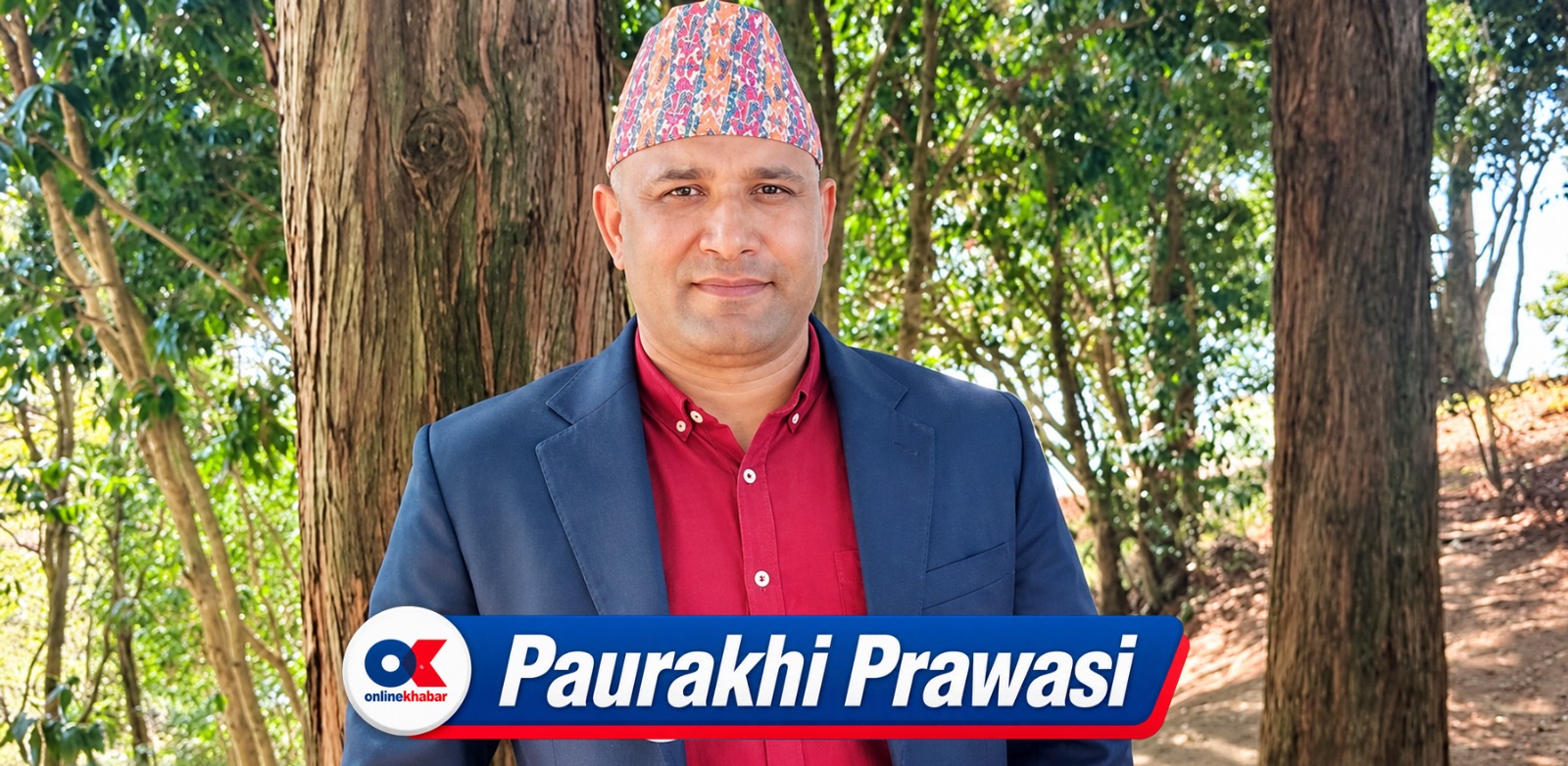

When Keshu Thapa went to visit a Nepali in prison in Malaysia, he expected the difficult part to be the visit itself. Instead, what happened after he left stayed with him for years.
The prison was far from the city. When Thapa came out, there was no taxi or bus available to take him back. With nowhere to go, he eventually slept on the ground.
“I thought, if this happened to me, how difficult must it be for others?” he recalls.
That night became more than an unpleasant experience. It became a question that would eventually change the direction of his life.
On August 21, 2017, Thapa and a group of friends established Jan Uddhar Kendra Malaysia, an organisation dedicated to helping Nepalis facing difficult circumstances in the country.
Since then, the organisation has helped around 400 Nepalis return home.
Some were mentally unwell. Some were suffering from paralysis. Others were undocumented, stranded or simply had no one to turn to.
For Thapa, helping them is personal.
He knows what it means to arrive in a foreign country with little money, little understanding of the language and no certainty about what the future holds.
More than three decades earlier, he had been one of those migrant workers.
Thapa grew up in a modest farming family in Galkot, Baglung.
His childhood was simple — school, farm work and playing with friends in the village. He passed his SLC examination in 2047 BS and moved to Butwal to continue his education.
He enrolled in an IA programme but failed one subject. He was unable to clear the backlog, and gradually his education came to an end.
“I studied in Butwal from 1991 to 1993. But I had a backlog in one subject in IA. I could not clear it, and it remained unfinished,” he says.
At the time, his family’s financial situation was not strong. Continuing his education seemed increasingly difficult, while finding a way to earn money had become a necessity.
Before leaving Nepal, Thapa worked as a schoolteacher in Butwal.
The work was respectable, but the salary was small and the demands were many. He began thinking about what his future might look like if he stayed.
He decided to leave.
Around 1993–94, Thapa travelled to Malaysia with two or three friends.
Malaysia was not yet the familiar destination it would later become for thousands of Nepali workers. For Thapa, the journey itself was an adventure into the unknown.
He travelled through Singapore, where he stayed for about a week before continuing to Malaysia.
“At that time, we could get a visa on arrival. We stayed in Singapore for a week and then came to Malaysia,” he recalls.
The first days were difficult.
He could not understand the language. The culture was unfamiliar. Work was hard to find and even harder to understand. But there was one thing that helped Nepalis at the time. They were known as Gurkhas.
“Back then, people did not really know Nepalis. They knew us as Gurkhas,” Thapa says. “There were very few Nepalis, and the respect they received was different. Once people heard ‘Gurkha’, they would often give them work.”
Thapa found a job at a furniture company. He started at the bottom, working as a labourer for eight hours a day and earning 17.30 Malaysian ringgit. He remembers earning the equivalent of only around Rs 480 to Rs 500 a day. But he kept working.
Within four years, he had risen from labourer to supervisor. Then the 1997 global economic crisis disrupted his work, forcing him to return to Nepal.
Back in Nepal, Thapa turned to business. He began importing clothes from Malaysia and selling them in Nepal. For around five years, he tried to make the clothing business work. It was not easy.
Customs, taxes and credit sales created constant problems. He would pay for goods before bringing them into Nepal, only to sell them on credit. Getting the money back was another struggle.
“For small traders like us, it was difficult to sustain a business in Nepal,” he says. “We would bring goods by paying in cash but sell them on credit. There was no certainty about when the money would come back.”
His regular trips to Malaysia — sometimes every two or three months — had already kept him connected to the country. When the business failed to develop as he had hoped, he decided to return to Malaysia.
In 2003, he went back. This time, he began a cleaning services company in Kuala Lumpur. The business survived. It eventually gave him the stability he had been searching for and, perhaps more importantly, the freedom to think beyond his own livelihood.
Living in Malaysia for years, Thapa saw a different side of migration.
He encountered Nepalis who had ended up in prison, workers living without legal status, people who had fallen seriously ill and those who had become stranded without the means to return home.
For many, the problem was not simply a lack of money. It was the absence of someone to help. His own experience outside the prison made him understand that helplessness.
That is why, in 2017, he decided to do something about it.
Jan Uddhar Kendra began modestly. Within a few months of its establishment, Thapa and his friends had bought tickets for five Nepalis and helped them return home. The numbers grew. One person became dozens. Dozens became hundreds.
Since 2017, around 400 Nepalis have been rescued and sent back to Nepal.
Not every rescue ends with a flight home. Some Nepalis have died in Malaysia, leaving families faced with the painful question of how to bring their loved ones back.
In four cases, Thapa helped arrange cremations in Malaysia because the families or circumstances made it impossible to send the bodies to Nepal.
“We take permission from the embassy and the municipality and carry out the final rites according to Hindu or Buddhist traditions,” he says.
The organisation also helps sick Nepalis access treatment, manages the remains of deceased workers, assists with the immersion of ashes and provides financial support in some cases.
Jan Uddhar Kendra was formally registered with the Malaysian government in 2019. Yet its work has remained rooted in a simple idea — that a Nepali who is alone in a foreign country should not have to face a crisis alone.
Thapa does not describe himself as someone who became a social worker because he had great wealth. He says his own hardships pushed him towards the work.
“I had suffered myself. When I had to sleep on the ground after visiting someone in prison, that experience shook me,” he says. “I did not want others to go through the same hardship, so I started social work.”
He also believes that social service requires two things — money and genuine interest.
“Social service cannot continue without funds, and it cannot continue without interest either,” he says.
Jan Uddhar Kendra does not rely entirely on large donors.
Nepali workers themselves contribute what they can. Funds are raised through small contributions and activities such as selling Dhaka topis.
It is a fitting model for an organisation whose work is centred on ordinary Nepalis.
Thapa left Nepal as a young man because he needed to earn. He arrived in Malaysia with little money and few certainties.
Over the next 32 years, he experienced almost every side of migrant life — the struggle of being a labourer, the satisfaction of rising through the ranks, the frustration of losing a job, the uncertainty of running a business and, eventually, the stability of building one that lasted. But his greatest sense of achievement does not come from the business he built.
It comes from the people he has helped.
Today, Thapa continues to run his cleaning services company in Malaysia while serving as the president of Jan Uddhar Kendra.
For thousands of Nepalis, his name has become associated not simply with business, but with help when there is nowhere else to turn.
“Earning money is for personal life,” he says. “But being able to do something for others — that is the real wealth.”
For a young man who once left Baglung hoping only to build a better life, that may be the most unexpected chapter of his journey.
The post How one Nepali migrant turned hardship into hope appeared first on OnlineKhabar English News.






28 Bhadra, 2083





 AED
AED AUD
AUD BHD
BHD CAD
CAD CHF
CHF CNY
CNY DKK
DKK EUR
EUR GBP
GBP HKD
HKD INR
INR JPY
JPY KRW
KRW KWD
KWD MYR
MYR OMR
OMR QAR
QAR SAR
SAR SEK
SEK SGD
SGD THB
THB USD
USD