 Notify Nepal
Loading...

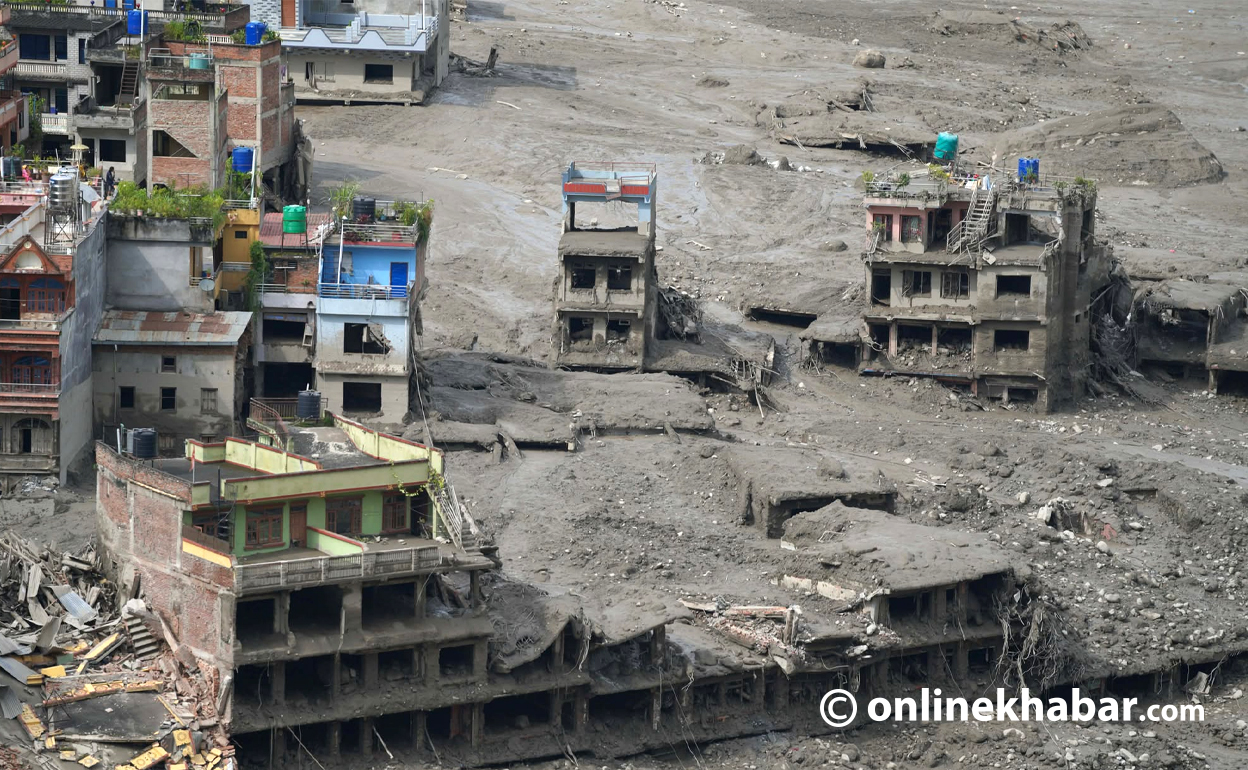
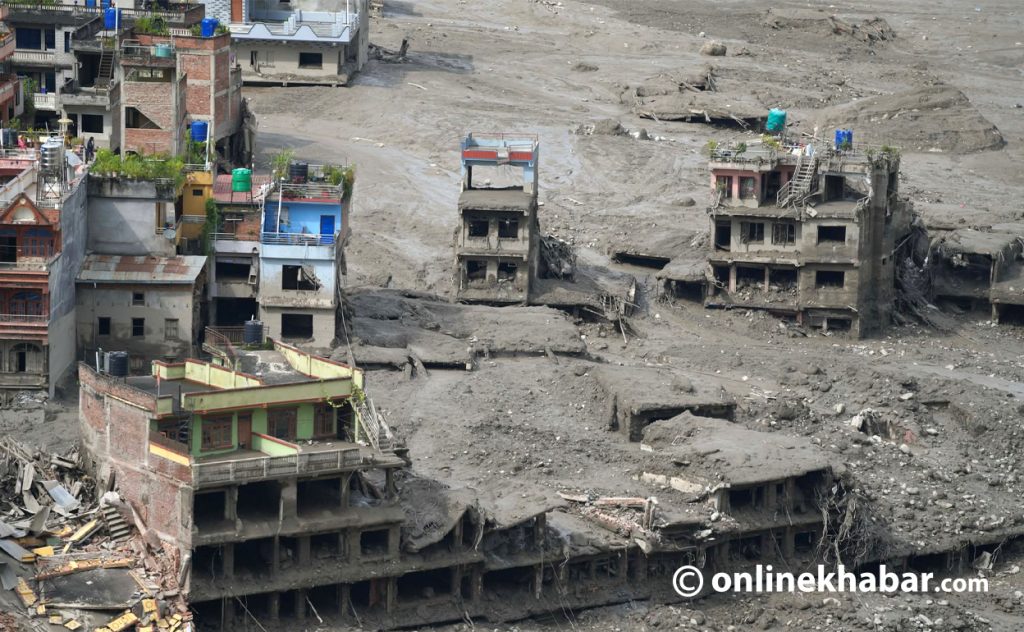
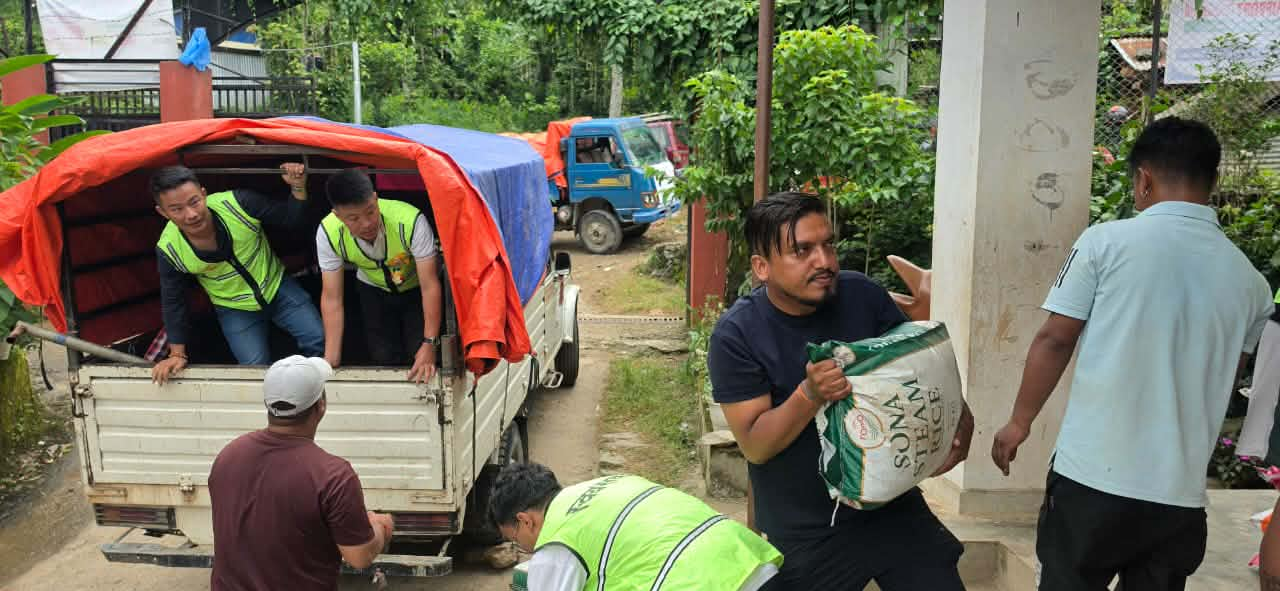
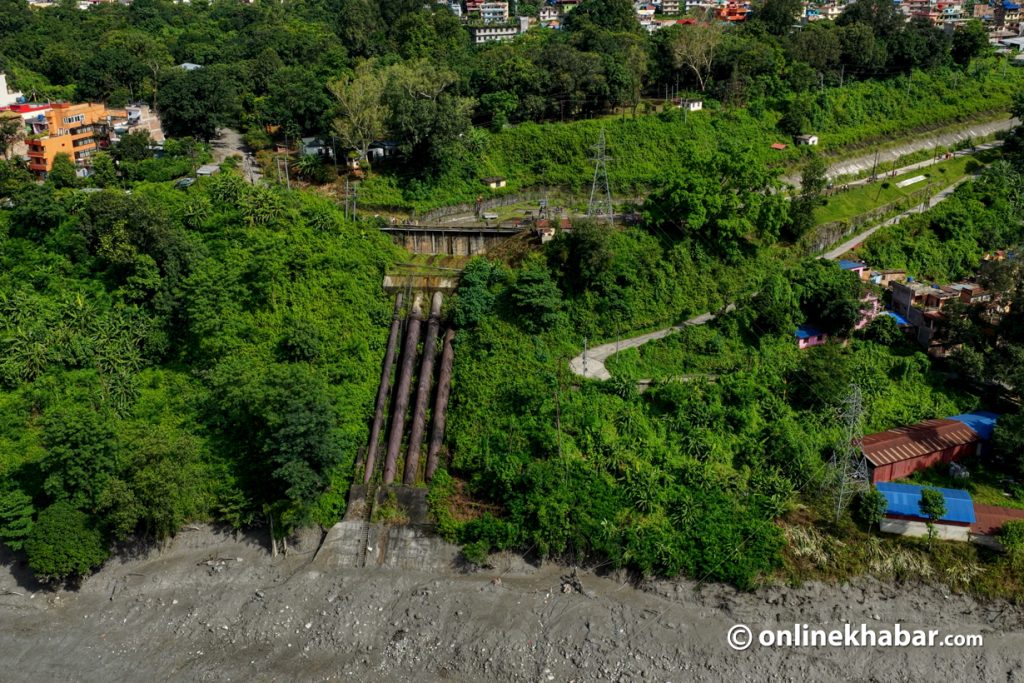
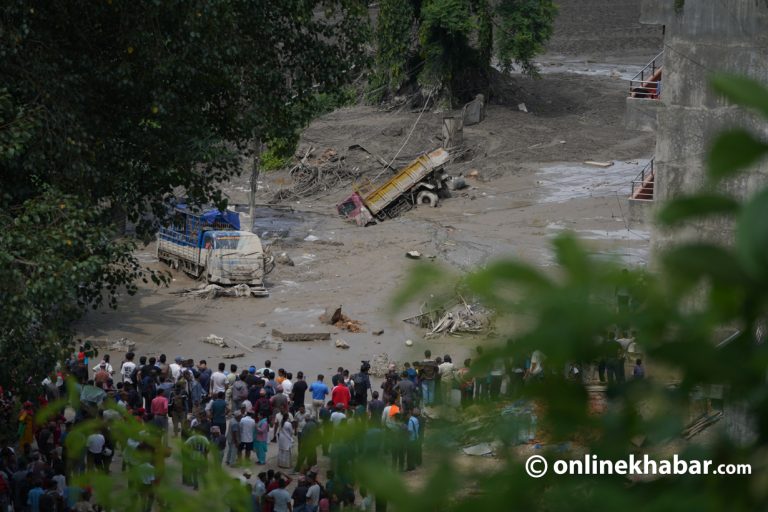
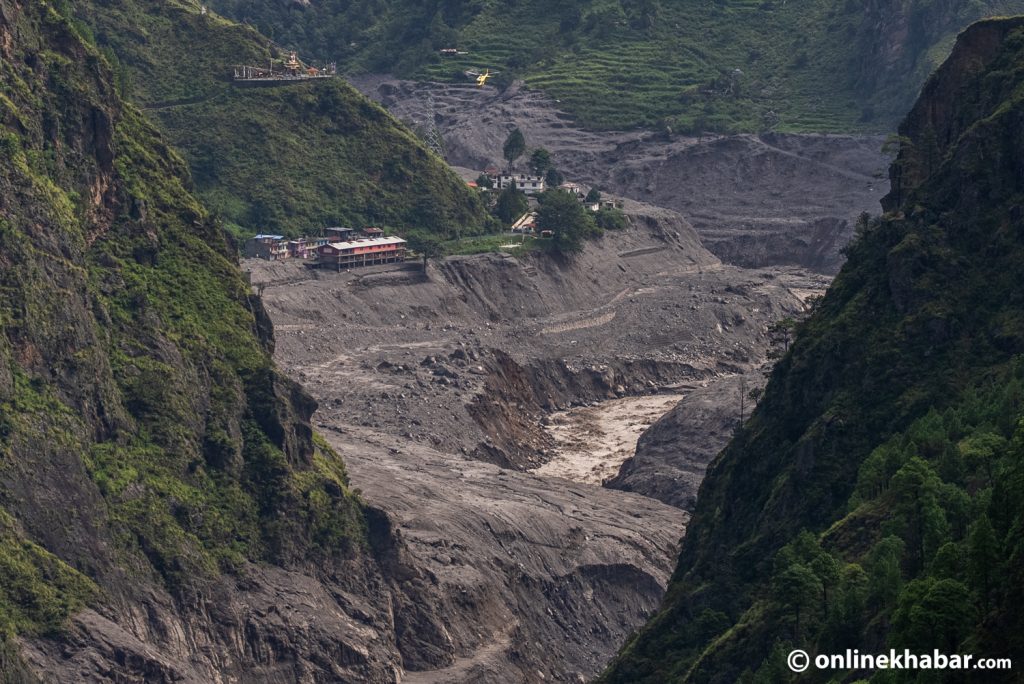
The recent floods in Rasuwa have once again reminded us how vulnerable Nepal remains to disasters. Families have lost homes and livelihoods. Infrastructure has been damaged. Communities are waiting for relief and, beyond that, the long and difficult process of recovery and reconstruction.
At a time like this, the generosity of people, organisations and countries around the world matters greatly.
Nepal needs help. We need financial resources, technical expertise, humanitarian assistance, technology, knowledge and experience. We need friends who can stand beside us when our own resources are stretched. And we should be grateful to everyone who comes forward.
But there is another side of disaster recovery that we must talk about—quietly, honestly and without pointing fingers.
When help arrives, influence can sometimes arrive with it.
Not everyone who comes with assistance has a hidden interest. Most people working in humanitarian and development organisations are genuinely committed to helping. But good intentions do not always mean that every approach is good for Nepal.
That is why, especially during a crisis, Nepal must be compassionate in accepting help—but careful in managing it.
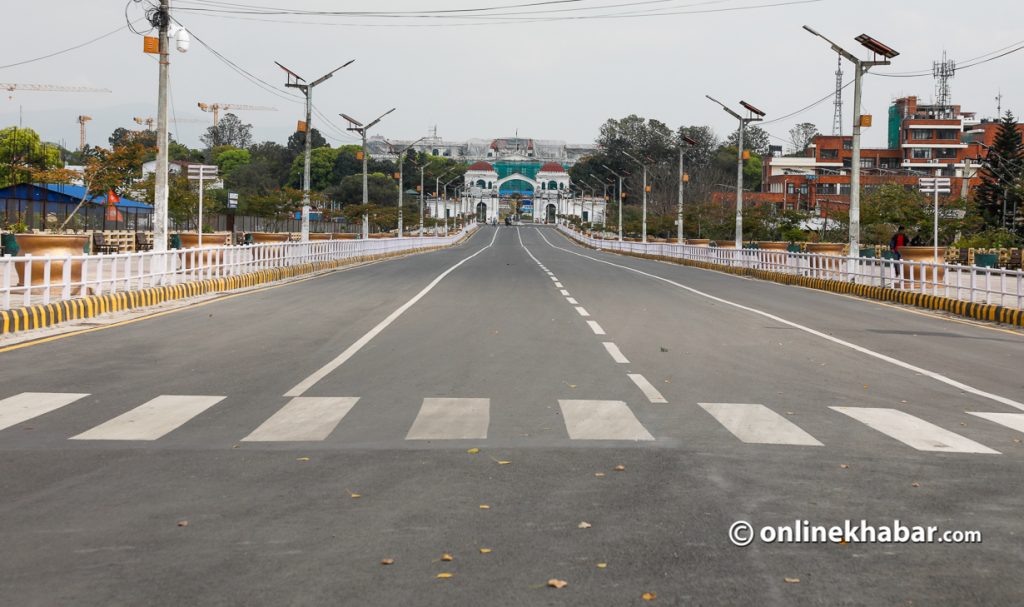
Walk through Singha Durbar and you will find a familiar development landscape.
In one room, a ministry is working with an international organisation. In another, consultants are discussing institutional reform. Somewhere else, a donor-funded team is developing a digital system. Another is preparing a policy document, workshop or training.
There may be one project for capacity building, another for resilience, another for digital transformation, another for disaster preparedness, and another for recovery and reconstruction.
Most have good intentions, and many have produced valuable results. But over time, something else can happen:
The project ecosystem can become bigger than the institution it was meant to support.
A new project brings a new team. The team brings consultants. Consultants bring recommendations. Recommendations bring new systems, which bring new reporting requirements. Before long, government officials may spend as much time responding to projects as they do strengthening the institution itself.
This is not necessarily anyone’s intention. But it is a risk Nepal must recognise.
A project should strengthen the government—not become a parallel government.
There is an important lesson from Haiti.
When the devastating earthquake struck Haiti on January 12, 2010, the international community responded with extraordinary generosity. Governments, UN agencies, international financial institutions, NGOs, charities, consultants and volunteers came to help. Billions of dollars were pledged.
Haiti desperately needed that assistance. Yet the years that followed became an important lesson for the international development community. Despite enormous international assistance, sustainable recovery proved extremely difficult.
One challenge was the fragmentation of assistance: many organisations, many projects, different priorities and complicated coordination arrangements.
UNDP itself later noted that dispersed and uncoordinated external cooperation could be harmful to development and emphasised the importance of strengthening the Haitian government’s ability to coordinate and manage external assistance.
The lesson is not that the world should not have helped Haiti.
It is much simpler: A country can receive enormous assistance and still struggle to build strong national institutions.
After a disaster, a country needs homes, schools, hospitals, roads, jobs and functioning government. But if too many outside actors arrive with their own projects, systems, priorities and timelines, something unintended can happen: There may be projects everywhere, but ownership becomes unclear.
That is the lesson Nepal should learn before we become another case study.
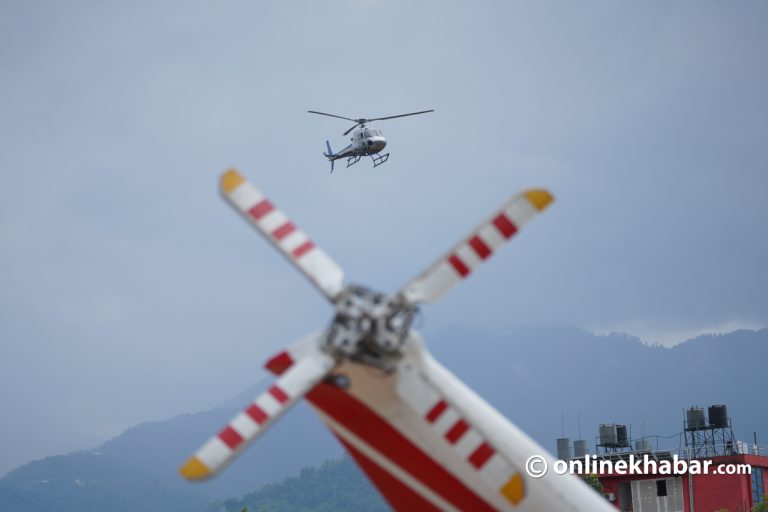
The recent Rasuwa disaster comes at an important moment for Nepal. As relief reaches affected communities, recovery and reconstruction discussions will become larger.
More resources will come. More organisations will arrive. More projects will be proposed. More experts will be available. More promises will be made.
This is good.
But it is also when Nepal must be especially careful. Why? Disasters create urgency and that can weaken scrutiny.
When people are suffering, it is natural to accept help quickly. But emergency speed should not mean abandoning transparency, coordination or national ownership.
We need to ask: Who is coming? What are they bringing? What do they want to do? Where will the money go? Who will implement it? Who will own the data and systems? Who will maintain them after the project ends?
And most importantly: What will Nepal be left with when the project is over?
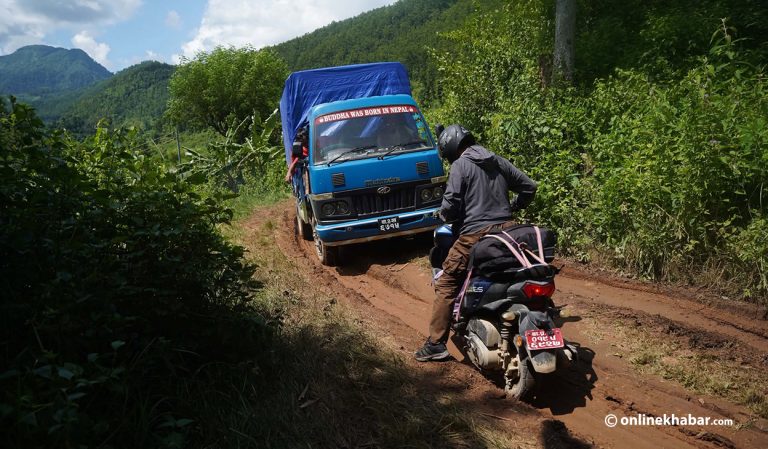
This should be Nepal’s message to international partners.
We are grateful for your support. Help us build our capacity, strengthen our institutions, train our people and bring technology and knowledge. Help us recover from disasters and build a more resilient Nepal.
But please do not replace the institutions that are supposed to lead Nepal.
An international organisation should complement government, not substitute for it. A consultant should advise, not decide and a donor should support, not govern.
A Project Task Team Leader should provide expertise and challenge our thinking when necessary, but also understand the limits of that role.
Ultimately, Nepal’s government must decide what Nepal should do and how Nepal should do it.
Let help enter through one door, open multiple windows, and empower multiple hands.
There will be times when Nepal’s approach differs from that preferred by a donor or consultant. That does not automatically mean Nepal is wrong.
Our geography, institutions, political and social realities are different.
What works in Washington, Geneva, Delhi or Singapore may not automatically work in Kathmandu, Jumla or Rasuwa.
Development cannot simply be copied and pasted.
This conversation is not only about I/NGOs and donors. It is also about us.
Nepal’s bureaucracy has a responsibility to protect the national interest. Government officials should be open to learning from the world. Foreign exposure, training and study visits can be valuable.
But they should never become incentives for accepting projects or recommendations.
A foreign trip is not free. A five-star hotel is not free. A workshop is not free. A consultant is not free. A project vehicle is not free.
Someone is paying for it, and ultimately that money is being spent in the name of development.
So perhaps every public official should occasionally ask: “If this money were coming directly from Nepal’s national budget, would I still consider this expenditure necessary?”
If the answer is yes, proceed. If the answer is no, perhaps we should think again.
Our development partners may have money. But that does not mean we should stop asking whether it is being spent wisely.
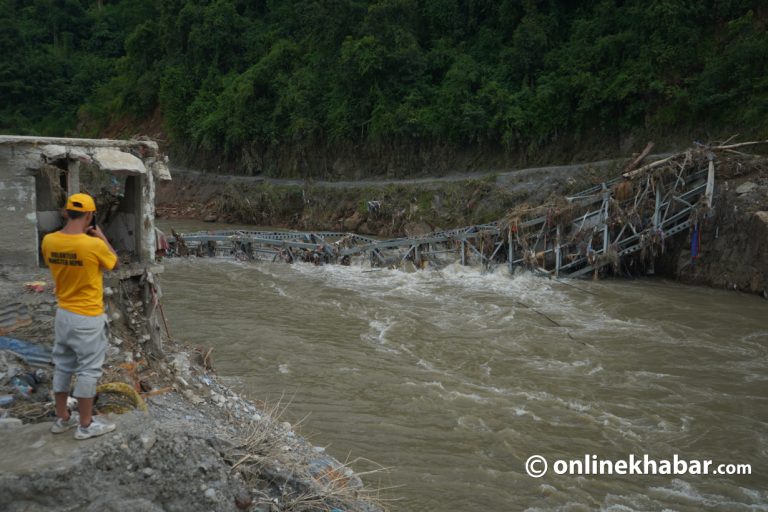
Nepal has many capable professionals—engineers, doctors, IT specialists, disaster management experts, economists, researchers, planners, administrators, academics and young innovators.
They may not always have the international title or the large consultancy behind them. But they understand Nepal. Their knowledge should not be treated as secondary simply because it is local. International expertise should add to Nepali expertise—not replace it.
We should bring the best of both together. This is particularly important in the digital age.
Every development project wants to create something: a portal, dashboard, database, assessment tool, mobile application or monitoring system. Each may have a valid purpose.
But if every project creates its own system, Nepal eventually ends up with systems that do not communicate with one another.
During a disaster, that becomes more than an IT problem. It becomes a governance problem.
A citizen should not have to wonder which government portal contains the correct information. A local government should not have to enter the same data five times. And a ministry should not have to maintain systems that disappear when project funding ends.
One government should mean interoperable systems, shared standards and one source of trusted information.
We do not need to close our doors to international cooperation. We simply need stronger doors.
Nepal should strengthen its policies and SOPs for I/NGOs and development partners. Every major project should clearly answer seven questions:
Who decides? Who owns? Who pays? Who implements? Who maintains? Who is accountable? What remains after the project ends?
Project expenditure should be transparent. Consultancy, travel, workshop, administrative and overhead costs should be visible and accountable.
And success should not be measured by the number of workshops, reports or meetings. It should be measured by one thing: Did Nepal become stronger?
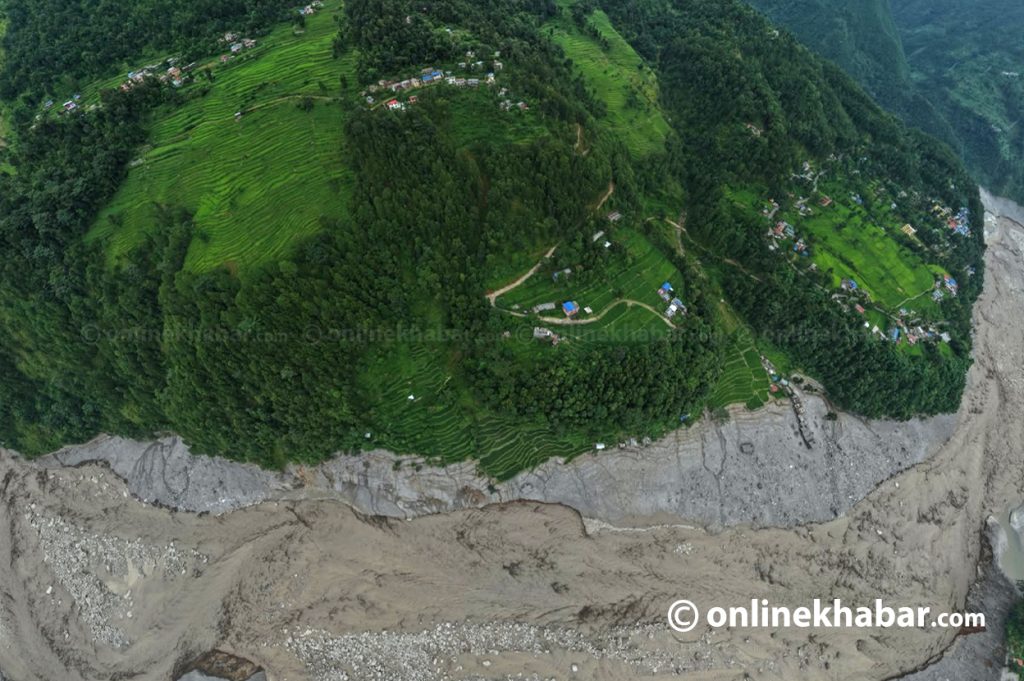
Nepal should not become suspicious of every international organisation that comes to help. That would be unfair. Many organisations and individuals have stood beside Nepal during difficult times and continue to do excellent work.
We should appreciate them. But gratitude should not mean blindness.
We can be thankful and still be careful. We can welcome assistance and still ask questions. We can accept expertise and still make our own decisions. We can work with international partners and still protect national ownership.
That is not hostility. That is maturity.
The Rasuwa floods should remind us not only of the vulnerability of our mountains and communities, but also of how we manage the help that comes after a disaster.
Relief will come. Money will come. Organisations will come. Experts will come. Projects will come. Some will be excellent. Some may be less useful. Some may have interests beyond their stated project objectives.
We do not need to reject them all. We simply need to be clever enough to know the difference.
Let us welcome every helping hand. But let us also keep our hands firmly on the steering wheel.
Let international partners walk with Nepal, not ahead of Nepal. Let them help us build institutions that can eventually stand without them. Let every dollar and every rupee create lasting value for Nepali people.
And let the ultimate test of every development partnership be simple: When the project ends and the donor leaves, is Nepal stronger than it was before?
If the answer is yes, we have built a partnership.
If the answer is no, perhaps we need to rethink the way we receive and manage help.
Nepal needs the world. But Nepal must build Nepal.
The post Nepal needs the world. But Nepal must build Nepal. appeared first on OnlineKhabar English News.




 AED
AED AUD
AUD BHD
BHD CAD
CAD CHF
CHF CNY
CNY DKK
DKK EUR
EUR GBP
GBP HKD
HKD INR
INR JPY
JPY KRW
KRW KWD
KWD MYR
MYR OMR
OMR QAR
QAR SAR
SAR SEK
SEK SGD
SGD THB
THB USD
USD