 Notify Nepal
Loading...

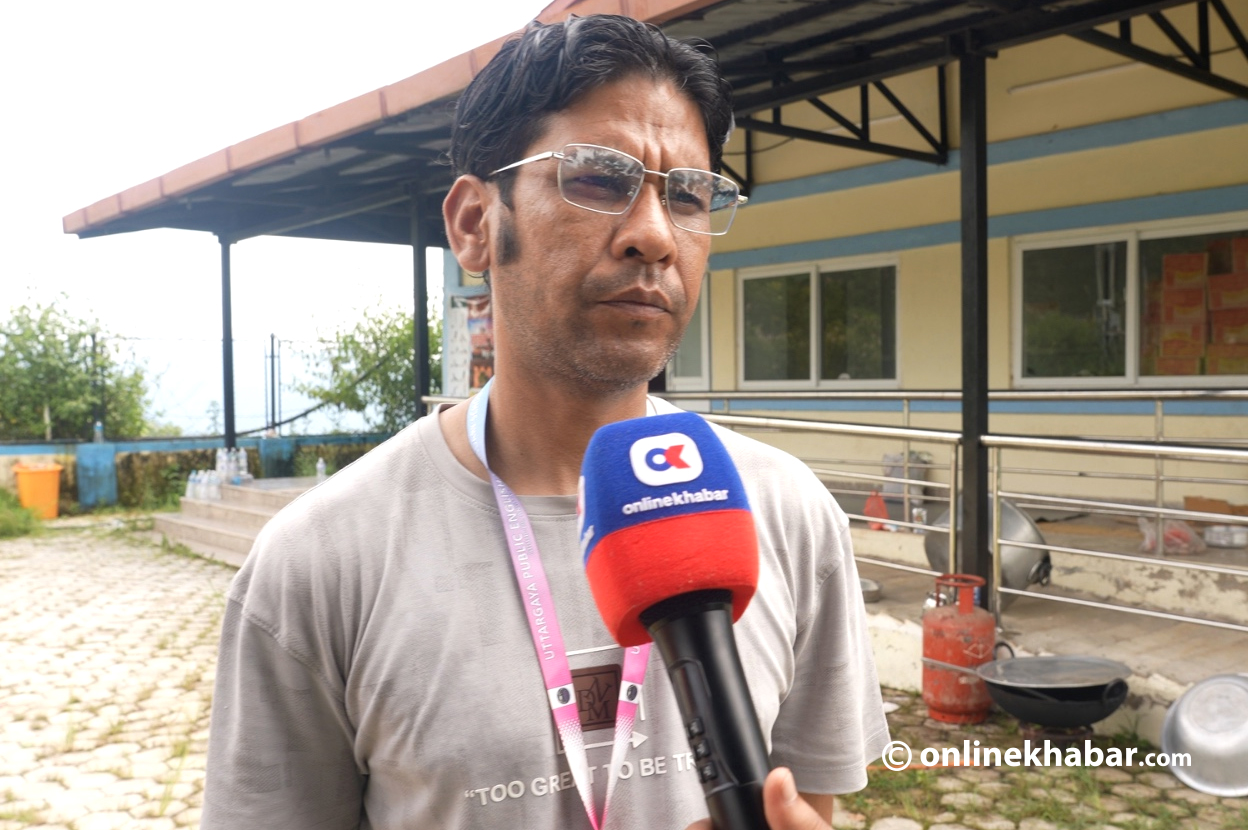
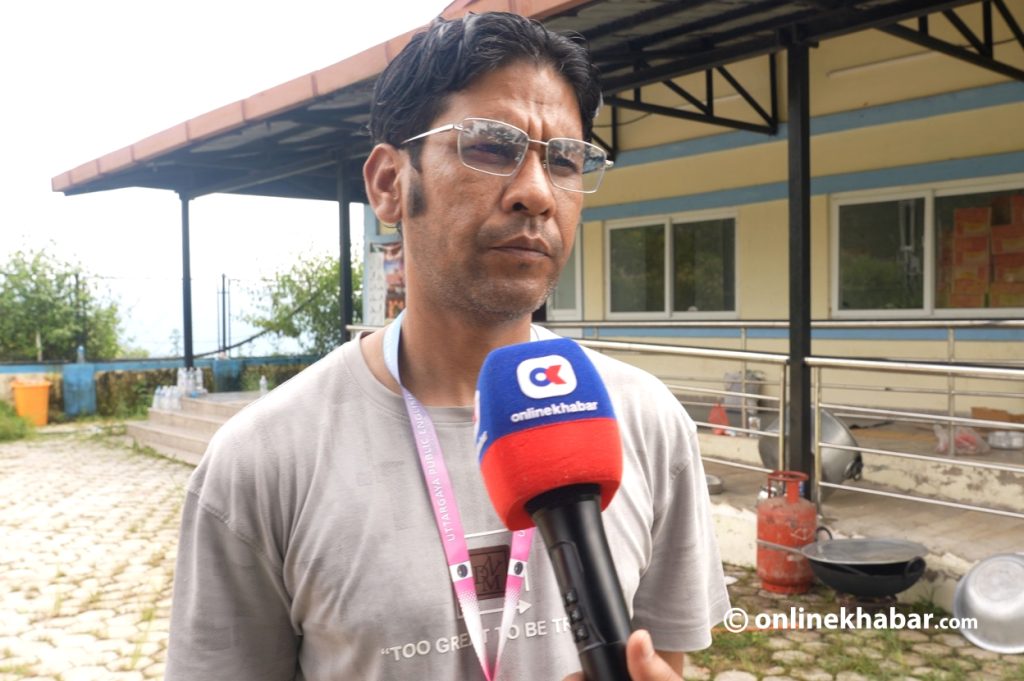
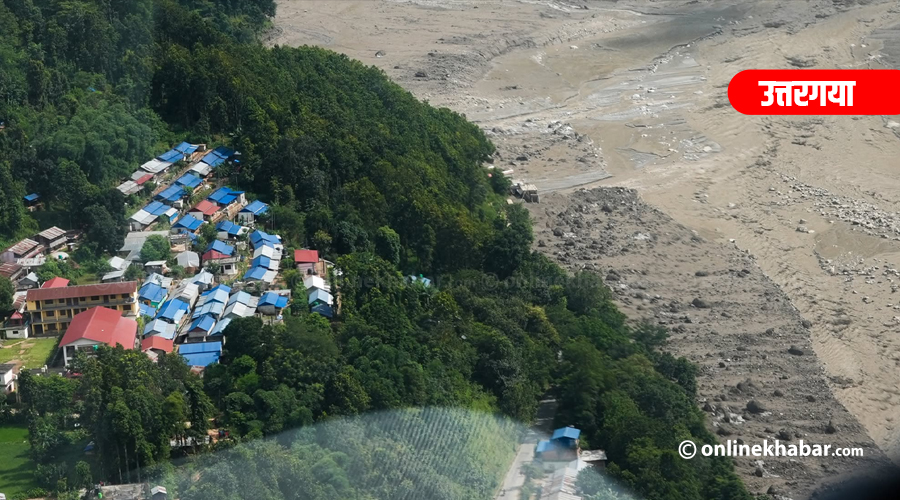
It was breakfast time at Uttargaya Public English Boarding School when Pawan Sharma received the warning.
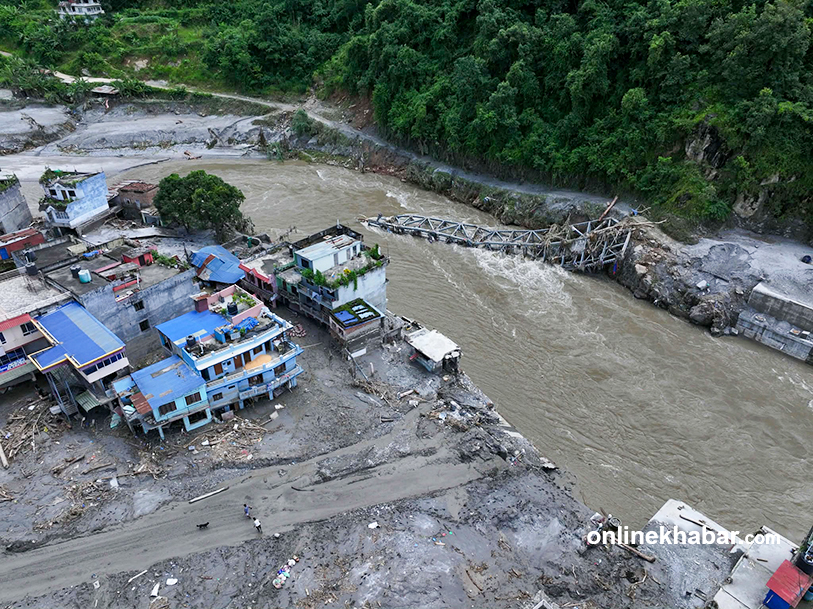
It was around 9:15 am. A huge surge of floodwater was moving downstream, the school was told, and people in the area needed to move at least a kilometre away from the Betrawati turn.
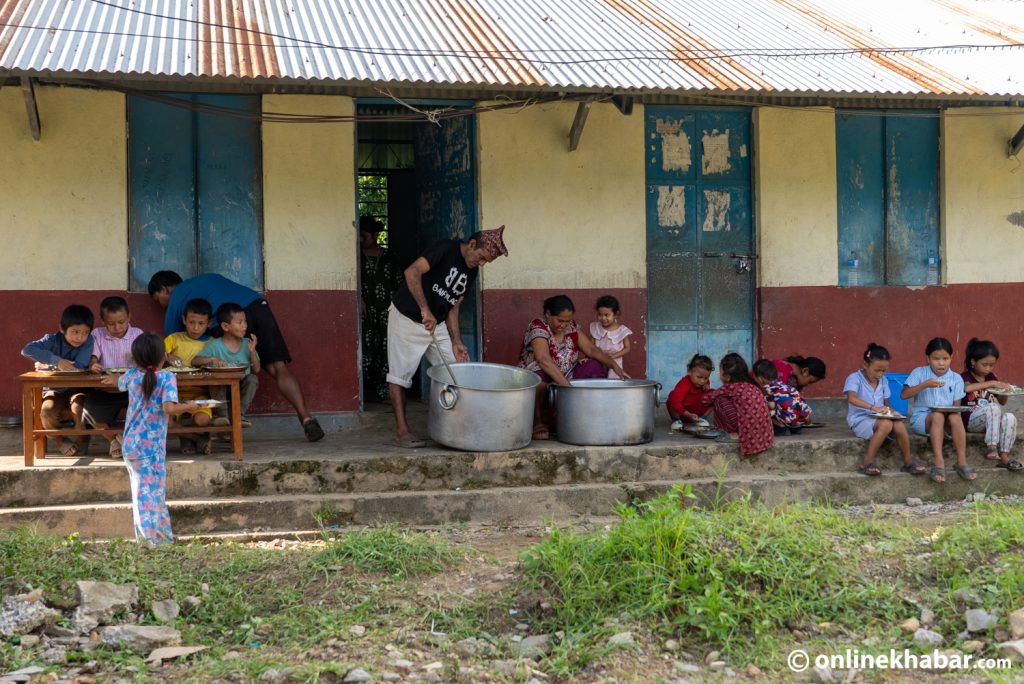
The hostel students were still eating.
Sharma did not wait.
“We stopped their food and took the children to the top of the hill, to a safer place,” he told Onlinekhabar.
For a school with more than 370 students, there was little time to think about what might happen next. There was only time to get the children out of the flood’s path.
What followed was a frantic effort to account for students, reunite them with their families and reach those who had become stranded as the flood swept through the area.
Sharma says around 95 percent of the students under the school’s care have since been handed over to their guardians or otherwise accounted for. But several children remain difficult to trace.
The school has records or information about roughly 40 to 45 percent of the students who were at the school during the disaster, he said. Around 10 percent were either on their way to other locations or staying at shelters elsewhere.
For some others, the school still does not know what happened.
“We have no record of them,” Sharma said. “We don’t know whether they left or stayed.”
Some of those children may have been with their guardians when the flood struck. That has made it difficult for the school to establish where they are.
The danger was not limited to the children.
As news of the flood spread, guardians began rushing towards the school to take their children home. Some came on motorcycles and in auto-rickshaws.
But even the journey to collect their children became dangerous.
“There were guardians who came to take their children, but they were caught along the way,” Sharma said.
Some managed to make their way uphill. Others were pulled to safety by people around them.
For Sharma and the school staff, the rescue did not end after the children were moved to higher ground.
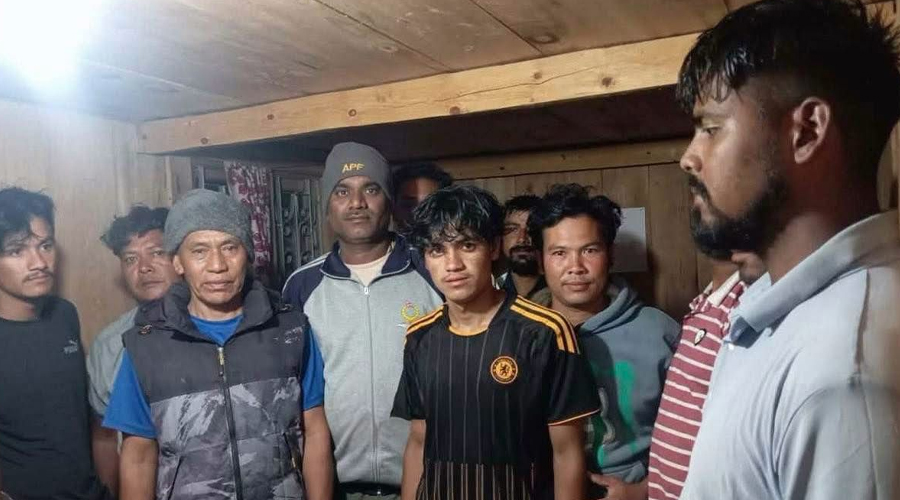
Some students had become stranded in forested areas. The school arranged vehicles and sent staff, including managing director Suraj, to reach them.
The rescue continued late into the night.
“We were bringing them down until 10 at night,” Sharma said.
When help did not arrive as quickly as the school needed, staff members began arranging things themselves.
Sharma said he approached the municipality, a nearby security barracks and government officials, asking for food and medicines for students sheltering above the school.
They were told relief would be provided, he said, but the immediate assistance did not materialise.
So the school bought first-aid supplies itself.
School representatives then travelled to Nuwakot, where they received further help and arranged vehicles to reach students who were still stranded.
The vehicles were used to bring children to safety, and the school continued handing them over to their families.
For Sharma, however, the flood was more than a rescue operation.
He had joined Uttargaya Public English Boarding School only about five months earlier.
A veteran of the education sector with 28 years of experience, Sharma is originally from Darjeeling. Before coming to Nepal, he had worked in schools in Uttar Pradesh, Bihar and West Bengal.
He had arrived in Uttargaya expecting to build something new.
“A new family, a new life,” he said.
That is what makes the aftermath so difficult for him.
“I feel as if I have lost a family,” Sharma said.
The school community he had only recently begun to call his own had been torn apart by a disaster nobody expected to reach such a scale.
People had assumed that sending children home would keep them safer.
Instead, for some families, the journey home became the most dangerous part.
“People normally think the children will be safe at home,” Sharma said. “But it turned out the opposite.”
Now, after the rescue, comes the harder question: how does the school begin again?
“It feels like we have gone back to minus zero,” Sharma said.
He hopes the situation improves quickly and that the children who remain unaccounted for are found.
The school is also discussing relocating some students to safer places while continuing to establish the whereabouts of those it has not yet been able to contact.
For Sharma, the disaster has changed the meaning of the school itself.
He came to Uttargaya for work. In five months, he said, he had begun to see the students and colleagues as his family.
Now, as he tries to help the school recover, he is left wondering how that family can begin again.
“I pray that everything gets better as soon as possible,” he said.
The post How a vice-principal’s quick action got students out of the flood’s path appeared first on OnlineKhabar English News.




12 Bhadra, 2083




 AED
AED AUD
AUD BHD
BHD CAD
CAD CHF
CHF CNY
CNY DKK
DKK EUR
EUR GBP
GBP HKD
HKD INR
INR JPY
JPY KRW
KRW KWD
KWD MYR
MYR OMR
OMR QAR
QAR SAR
SAR SEK
SEK SGD
SGD THB
THB USD
USD