 नोटिफाई नेपाल
Loading...

Kathmandu, November 16
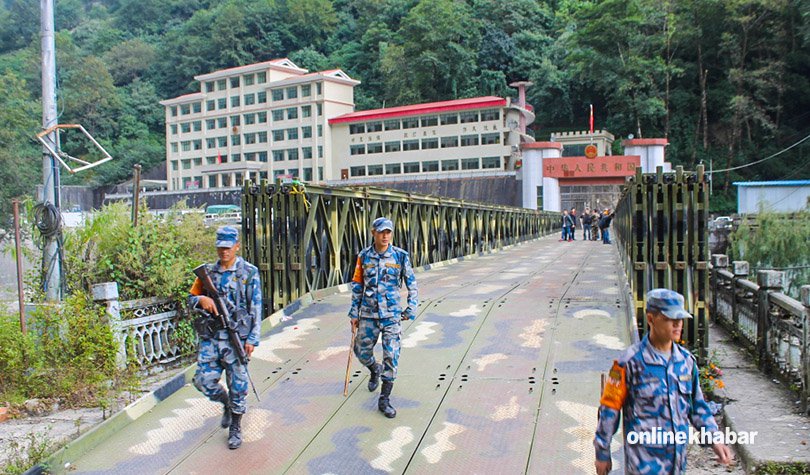
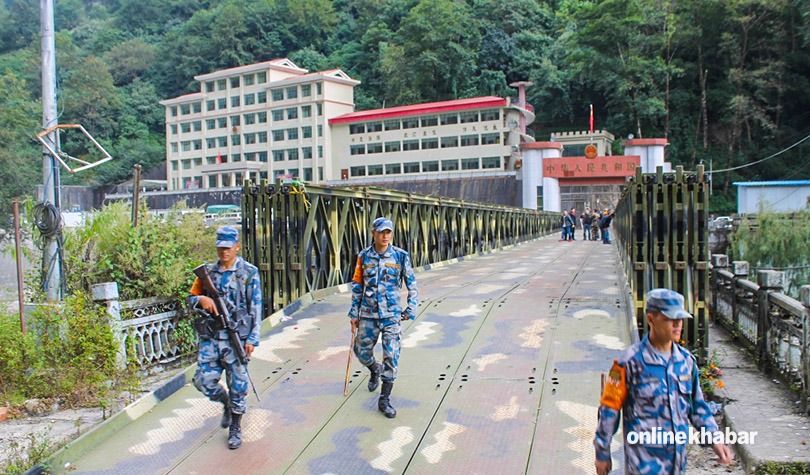
Nepal’s two major trade points with China, Tatopani and Rasuwagadhi, are currently out of operation, forcing traders to rely increasingly on the Korala border point in Mustang.
While the Rasuwagadhi crossing has been disrupted by flooding in the Bhotekoshi River, China has also suspended regular commercial movement through Tatopani. As a result, the pressure of Nepal-China trade has shifted towards Korala, where the longer transportation route has significantly increased costs.
The higher freight expenses are putting upward pressure on market prices, while businesses and residents in the Tatopani border area are also losing their livelihoods.
China suspended commercial operations at Tatopani on 14 Bhadra 2083, citing landslide and flood risks along the Araniko Highway. Although the crossing was briefly reopened for three days during the Dashain festival, it was shut again afterwards, bringing business activities in the border area almost to a standstill.
Hotels, shops, transport operators and workers who depend on cross-border trade have been particularly affected.
Trade has faced further disruption following the closure of Rasuwagadhi due to flooding in the Bhotekoshi River. With both major crossings closed, traders have increasingly turned to Korala in Mustang to import goods. However, transporting cargo through this route has proved considerably more expensive.
Businessman Basanta Nepal said transporting a container to Kathmandu costs around Rs 60,000 through Tatopani or Rasuwagadhi, but the expense can reach as much as Rs 600,000 when using the Korala route.
The higher cost is partly due to the distance involved. Goods transported through Korala have to travel around 900 kilometres from Lhasa and another 450 kilometres from Lo Manthang.
The increased freight costs have directly affected the prices of imported goods. Businessman Naniram Tiwari said consumers are now having to pay more as traders pass on the additional transportation expenses.
Traders have urged the government to intensify diplomatic efforts to resume operations at Tatopani as soon as possible. They say the federal government’s high-level engagement has so far been insufficient, although dialogue with China is reportedly taking place at the political level.
Madhav Sapkota, a former member of the House of Representatives from Sindhupalchok, and Dr Rupak Sapkota, a foreign policy expert and former foreign affairs adviser to then prime minister Pushpa Kamal Dahal, have held meetings with Chinese political leaders, urging them to fully reopen the border point.
According to former lawmaker Sapkota, the Chinese side has taken the issue seriously and expressed a positive position on reopening the crossing.
However, the issue extends beyond traders’ demands for the resumption of business. China has prioritised border security in view of the Bhotekoshi floods, the possibility of glacial lake outburst floods and landslide risks near the crossing.
Stakeholders say the government must complement diplomatic dialogue with investments in safer roads, reliable early warning systems and infrastructure to reduce disaster risks if Nepal-China trade is to operate smoothly.
The post Closure of Tatopani and Rasuwagadhi border points pushes up Nepal-China trade costs appeared first on OnlineKhabar English News.




 AED
 AUD
 BHD
 CAD
 CHF
 CNY
 DKK
 EUR
 GBP
 HKD
 INR
 JPY
 KRW
 KWD
 MYR
 OMR
 QAR
 SAR
 SEK
 SGD
 THB
 USD