 नोटिफाई नेपाल
Loading...

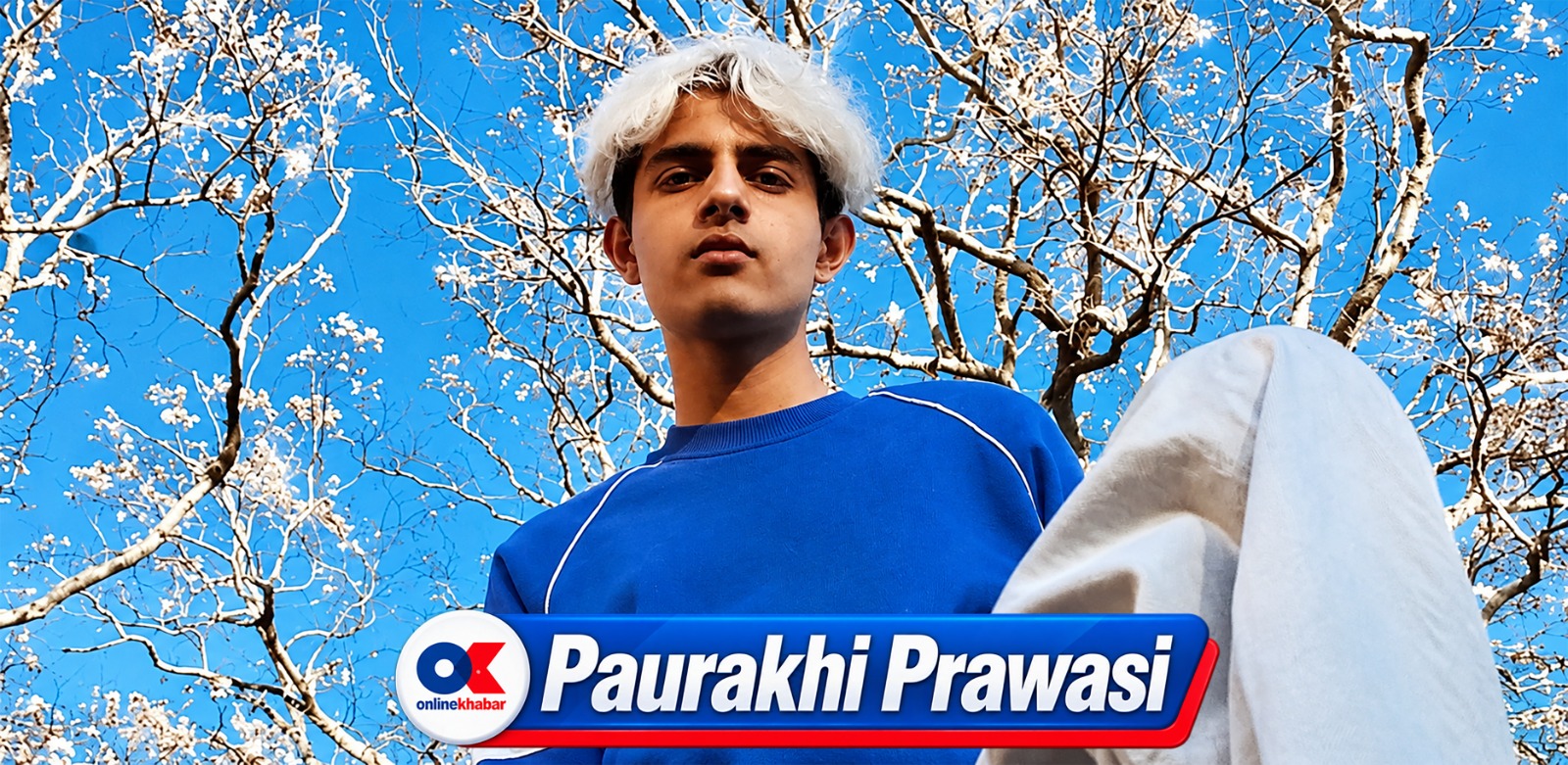
In 2025, Curtis Waters returned to Nepal with his family and travelled to the village in Lamjung where his mother was born. Standing there, he looked at the fields and forests where his mother had once cut grass. For a moment, the distance between that quiet Nepali village and the life he now leads in North Carolina seemed enormous. But for Waters, those two worlds are connected.
His journey has taken him from Kathmandu to India, Germany, Canada and finally the United States, where he has built an international career in hip-hop, pop and indie pop.
Born Abhinav Bastakoti in Kathmandu in 1999, he grew up moving between countries as his parents pursued their education and careers. Today, millions know him as Curtis Waters.
But before the name, the music and the global recognition, there was a boy who loved comics, drew cartoons and quietly made music late at night while his parents hoped he would concentrate on his studies.
Curtis Waters began his early education at Modern Indian School in Chobhar, Kathmandu. His childhood, however, was not confined to Nepal.
He moved with his parents to India and Germany, and when he was 10, the family moved to Calgary, Canada.
As a child, he loved reading comics and storybooks and spent time drawing cartoons.
Music entered his life almost by accident.
At 14, he returned to Nepal for three months for his bratabandha ceremony. Before coming, he had downloaded FL Studio onto his laptop. He began experimenting with beats. What started as curiosity soon became an obsession.
By the time he was studying at Winston Churchill High School in Calgary, making music and doing graphic design had become ways for him to deal with the loneliness and frustration that often came with adolescence.
His parents, like many immigrant parents, wanted to make sure their son received a good education.
His mother enrolled him in Kumon to strengthen his mathematics and academic skills.
But Curtis Waters was increasingly drawn towards music.
Mathematical formulas and piles of homework began to feel like another burden. Even the Kumon logo started reminding him of the frustrated boy he felt he was becoming. So he began making music secretly, often late into the night. He knew his parents were not particularly happy about it.
Still, he continued studying while trying to prove that his passion for music could become something more.

Then he discovered that a beat battle was being held in Calgary. He was only 15 and approaching his 16th birthday. Participants had to be at least 18 to enter. That did not stop him.
He spent two or three days putting his studies aside to prepare for the competition and eventually managed to get into the venue through the back door.
He competed. And he kept winning. He reached the final, where he faced an established musician around his father’s age. He finished second. That was the day when he turned 16.
He went home carrying awards, gifts and two scholarships for music training. For perhaps the first time, his parents could see just how much the music meant to their son.
Seeing his face light up after the competition, they began to understand something themselves. Perhaps this was not simply a distraction from his studies. Perhaps music and creativity were what he was meant to pursue.
In 2017, the family moved again, this time to North Carolina in the United States. Curtis Waters completed the rest of his high school education there. The transition was not easy.
Some subjects from his Canadian schooling did not align perfectly with the American curriculum. Friends he had grown up with in Canada were now far away. Once again, music became an outlet.
That same year, the Global Beat Battle was held in Toronto.
With his family’s support, he travelled from the United States to compete. He made it through a field of 65 contestants from around the world and reached the final eight.
The result gave him something he needed more than a trophy. Confidence.
Around this time, Curtis Waters was posting his rap music online. But he felt that the name Abhinav Bastakoti did not quite fit the character he was creating through his music. He wanted another identity.
He took “Curtis” from Ian Curtis, the lead singer and songwriter of Joy Division, an artist he admired.
“Waters” came from another artist he liked — Frank Ocean.
And Curtis Waters was born.
At first, the name was almost a joke. Over time, however, it became something much more meaningful.
“For me, Abhinav is a person, while Curtis Waters is a character,” he says.
He began disappearing into that character when he made music. Eventually, the character became the artist the world came to know.

By the time he finished high school, even his parents had begun to see his future differently. They no longer insisted that he pursue a conventional career. They encouraged him to study music.
Curtis Waters applied to the music programme at the University of North Carolina at Chapel Hill and went for an interview carrying some of his own compositions. The professors recognised his ability and passion. But instead of simply offering him a place, they gave him something else — advice.
They told him that if he studied there, he would have to follow formal and theoretical music education. He might eventually become a professor like them. But if he followed his passion and created freely, they believed the world might one day know his name.
They even told him they would use his music as material to teach other students. The advice made both Curtis Waters and his parents reconsider his path.
He eventually enrolled at UNC Greensboro, living in a dormitory and developing his music alongside his studies. Then the COVID-19 pandemic arrived. The world shut down.
Concerts stopped. Music venues closed. Artists were left searching for new ways to reach audiences. For Waters, the internet became that stage.
In early April 2020, he uploaded a 15-second clip of his hip-hop/pop song Stunnin’ to TikTok. The video featured him dancing with his 16-year-old brother, Albert.
The caption was deliberately playful.
He said he would keep posting himself dancing to the song every day until it went viral.
It did not take long.
Within weeks, Stunnin’ exploded.
Millions of people began making videos using the song, while tens of millions watched them.
On YouTube, the song received more than two million views within a month.
The track reached No. 3 on Rolling Stone’s Breakthrough 25 chart. By July 2020, it had accumulated more than 35 million Spotify streams. Major record labels began approaching him. But Waters chose not to sign with a record label. He wanted to remain an independent artist.
He did, however, sign a licensing deal with BMG, while Chris Anokute — who had managed artists including Katy Perry and Rihanna early in their careers — became his manager.
The attention grew rapidly.
In June 2020, Rolling Stone published a detailed article about his breakthrough, describing the TikTok success of Stunnin’ as a challenge for major record labels.
A month later, The Guardian featured him in a lengthy article under the headline describing him as the “TikTok king” Curtis Waters and highlighting his sudden arrival in the music industry.
The teenager making music secretly at night was suddenly being interviewed by international media.
The success of Stunnin’ opened doors around the world.
The song eventually passed one billion streams and earned certification from the Recording Industry Association of America (RIAA), including platinum certifications in Canada, Australia and Brazil and gold certifications in the United States, New Zealand, Mexico and India.
In 2021, Stunnin’ was also nominated for three Juno Award categories, including Fan Choice and Breakthrough Artist of the Year.
The song was used commercially by brands and organisations including Mercedes-Benz, Meta, the NBA, the Grammys and White Claw.
Curtis Waters began performing at festivals and events across North America.
He appeared at South by Southwest in Texas, Raleighwood in North Carolina, a music showcase in Colorado and the Northern Lights festival in Edmonton.
He has also performed solo in more than 15 major cities across the United States and Canada.
But he did not allow the success of one song to define his entire career.
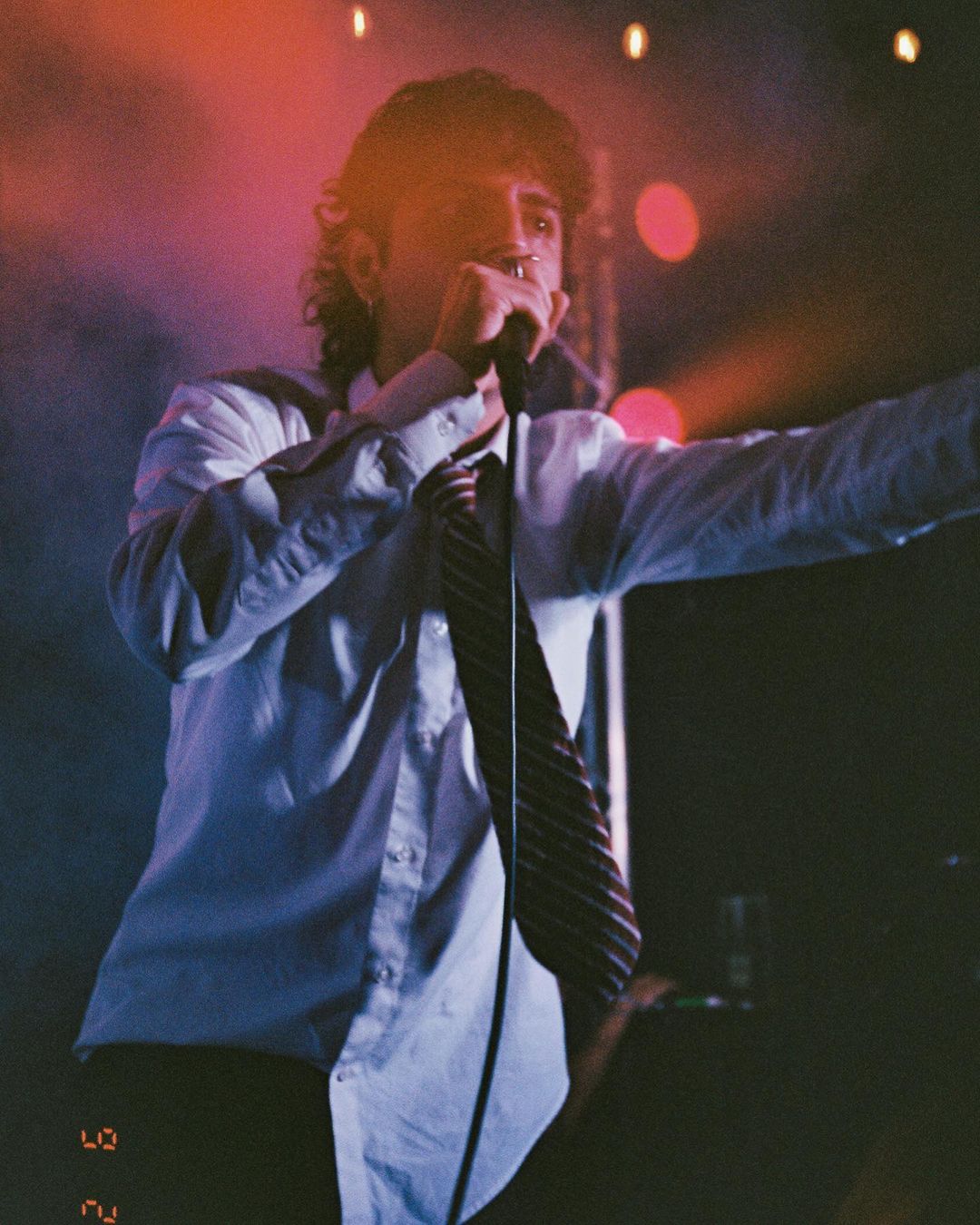
After Stunnin’, Waters released System, a high-energy hip-hop track that reflected on the emotional ups and downs that followed his sudden fame.
In October 2020, he released his first album, Pity Party.
The album contained 12 songs, including Stunnin’ and System, many of which he had created while living in the UNC Greensboro dormitory.
His second album, Bad Son, followed in 2023.
It contained 14 tracks and explored his experiences and identity in greater depth.
Waters says he had been thinking about the album for around a decade and spent years putting it together.
“For me, it is not just music,” he says. “It is the whole life story of the son of an immigrant family — someone struggling with his identity and family responsibilities.”
The album also draws on his childhood, emotional experiences and cultural identity.
Now, he is working on the next stage of his musical journey, releasing songs he has been developing since 2023.
He says the new work will reflect what he has learned through his experiences.
For him, music is another form of storytelling.
“This time, my creations will include what I have learned and experienced so far,” he says. “I believe music is another artistic form of storytelling. These songs will essentially carry positive messages about life.”
Curtis Waters does not simply write and perform his songs.
He handles everything from lyrics, music and vocals to recording, mixing and mastering.
He has built a reputation as a DIY artist and is also taking on more of the visual art and creative work behind his music.
He has collaborated with artists from his generation and the generation that followed.
His collaboration with Ali Otto and Kim Petras on SugarCrash! became one of the notable collaborations of his career.
He is also working as executive producer on emerging singer Nafis’s debut album and has taken on the same role for songs by Rema, a South Asian-origin singer based in California.
For Waters, music is not simply entertainment.
It is part of how he exists.
“For me, music is the essence of life, the basis of living,” he says. “The joy of making songs and expressing myself is something I cannot stop, whether I want to or not.”
His music carries his experiences, culture and understanding of the world.
And perhaps that honesty is part of what has allowed listeners to connect with it.
Curtis Waters was born in Nepal.
He grew up across several countries. He was shaped by the internet. Today, he makes alternative music for an audience that is largely made up of people from his own generation. That audience crosses borders, ethnicities and communities.
Waters does not want his music to be confined by those labels either.
When he creates, he says he is not thinking of himself primarily as Abhinav, the son of Nepali parents.
He becomes Curtis Waters.
“I listen to the voice of my heart,” he says. “The more you put something inside boundaries, the more artificial the creation becomes.”
For him, authentic art requires freedom from those boundaries.
“The more free you feel from limits and restrictions, and the more you stay away from prejudices and biases, the more authentic your creation can be.”
It is an idea that perhaps explains the distance he has travelled — geographically as well as creatively.
Before he became an internationally recognised musician, Waters had to make a difficult choice.
He grew up in a world where studying hard, getting a job and earning social respect were considered the safest paths to a good life. Choosing music instead meant going against those expectations. It was, in his words, a quiet rebellion. He faced uncertainty, disagreement and doubt. But he kept following his passion.
“The inner happiness you get from following your passion cannot be provided by any material comfort or social status,” he says.
Eventually, the world began to notice. His face appeared on billboards in New York, Toronto and other cities. His songs played on radio stations. Brands used his music in advertisements. International publications wrote about him. The anonymous child of an immigrant family had acquired a global identity. Yet the lesson he draws from the journey is not simply about fame.
“I’m learning through life, and I put the truths I learn into my songs and music,” he says.
His message to young people who want to create is simple.
Listen to your heart. Trust it. Do not allow the approval or negativity of family and society to determine your worth.
“If we prove ourselves to ourselves, one day our family, relatives and society will believe in us too.”
After speaking with Waters, the influential music publication Complex captured that journey in the title of its own article about him: “Nobody believed in Curtis until everybody did.”
And perhaps that sentence says as much about Abhinav Bastakoti’s journey as any award, chart position or billion-stream milestone.
Before the world knew Curtis Waters, there was simply a young boy making music late at night — trying to find his own voice.
The post A beat, a bedroom and a dream that went global appeared first on OnlineKhabar English News.
-ink-1789539291.jpeg)





३० भदौ , २,०८३




 AED
AED AUD
AUD BHD
BHD CAD
CAD CHF
CHF CNY
CNY DKK
DKK EUR
EUR GBP
GBP HKD
HKD INR
INR JPY
JPY KRW
KRW KWD
KWD MYR
MYR OMR
OMR QAR
QAR SAR
SAR SEK
SEK SGD
SGD THB
THB USD
USD