 नोटिफाई नेपाल
Loading...

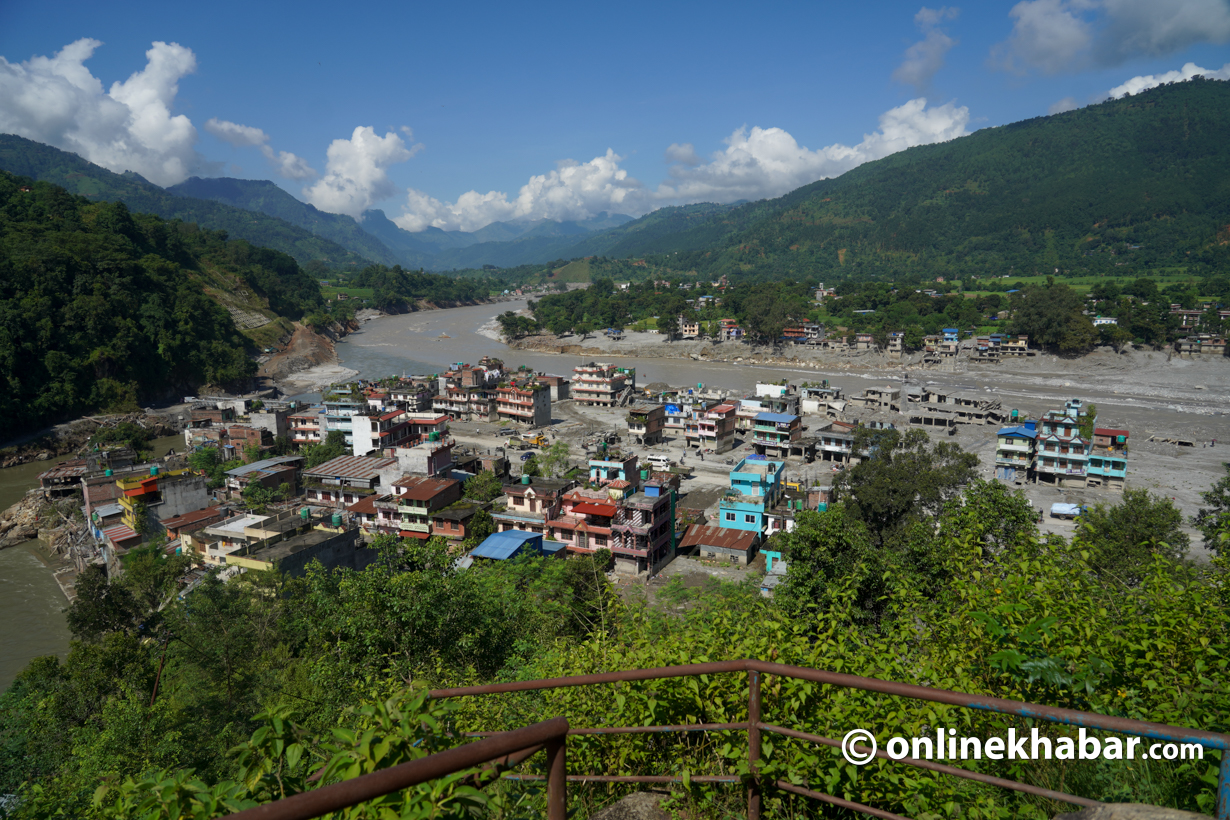

The Himalayan flood came with the force of a tsunami, tearing through settlements with water, mud and debris and leaving behind homes without families, families without answers and communities struggling to understand the scale of what they have lost. The full number of people missing remains uncertain. Some may still be buried beneath layers of mud and debris, while others may have been trapped in tunnels or swept downstream by swollen rivers. As recovery teams continue their search, bodies have been carried far from the places where people lived and into areas such as Chitwan.
Chitwan, known for its forests, rivers and wildlife, has therefore become an unexpected destination for the dead. Bodies recovered from rivers are arriving from places hundreds of kilometres away, placing additional pressure on hospitals and temporary facilities that were never designed to manage such a large number of remains at once. Decomposition is also making identification increasingly difficult. At the same time, families continue to arrive with photographs, names and whatever information they have, hoping that one of the recovered bodies might finally tell them what happened to someone who has not returned home.
For these families, the disaster has not entered its aftermath. It is still unfolding.
This has left Nepal confronting a question that no disaster response system wants to face: What happens when there are more dead than our systems can hold?
The decision to bury unidentified bodies is understandably painful for families still waiting for their loved ones. But it also comes at a time when hospitals and temporary facilities are running out of space, recovery teams are still bringing in bodies, and decomposition is making identification harder. In such circumstances, temporary burial may become necessary. The concern, however, is what happens to the identity of those buried.
Authorities say the bodies are being assigned identification numbers, documented, and subjected to DNA testing, with other evidence preserved before burial so they can be identified and returned to their families later. This is important, but it will only provide reassurance if these records are carefully maintained and can actually be used when a match is found.
What this situation really shows is that Nepal was not fully prepared to manage death on this scale. The challenge is no longer only recovering bodies, but also making sure that every person who is buried without a name can still be found later. A body may have to be buried, but its identity must never be lost. A grave may be temporary. The record must never be.
For the government, an unidentified body may become a case number. For a family, it is someone they love: a mother, father, child, spouse, sibling or friend. For families still waiting for missing relatives, finding an unidentified body may not bring relief. It can bring another painful question: Could this be my person?
That uncertainty makes it difficult to grieve or move forward. Families are left not knowing whether their loved one is dead, still missing, trapped somewhere or among the remains recovered in another district. This is why identification is more than a forensic or administrative process. It is part of humanitarian care. Giving a person their name back can also give a family the certainty they need to begin mourning.
This matters even more in Nepal, where death and final rites are closely connected to family, culture and religion. Families may fear that burying someone before identification could make it harder to recover the remains or carry out the final rites according to their wishes.
At the same time, authorities are dealing with a real capacity problem. Facilities designed for routine deaths cannot suddenly manage hundreds of bodies after a major disaster. There may be no simple answer, but the response must balance this practical reality with the basic dignity and rights of those who have died and the families still waiting for them.
The government has pointed to decomposition, limited storage and health concerns as reasons for burying unidentified bodies. These are real concerns, but the public health argument should be placed in context. Dead bodies after natural disasters do not automatically cause epidemics. The greater immediate risks usually come from contaminated water, poor sanitation, overcrowding, injuries, displacement and disrupted healthcare.
This does not mean the management of human remains is unimportant. Decomposition, safe handling and the psychological impact on families all require proper attention. But public health cannot be reduced to controlling biological risks. It also includes dignity, mental well-being and the needs of affected families.
A response that protects the living while leaving families without answers about their dead is incomplete. Nepal does not have to choose between public health and human dignity. A responsible response must protect both.
The first disaster was the flood itself. The second could be what happens when people disappear from the system even after their bodies have been recovered.
A person can disappear once when the flood carries them away. They can disappear again if their remains are never connected to a name, a family or a reliable record. That second disappearance is preventable.
Nepal has begun collecting DNA and other identifying information, but identification cannot stop there. Every unidentified person needs a proper record of where and when the remains were found, photographs, personal belongings, biological samples, an identification number and the exact place of burial. Families also need a clear way to report missing relatives, provide DNA samples and receive updates, even after the immediate disaster response has ended.
The government’s assurance that identified remains can later be exhumed and returned to families is important. But for families to trust that promise, there must be a system they can access and follow.
For someone standing in Chitwan with a photograph of a missing family member, reassurance from Kathmandu is not enough. They need to know that the person they are searching for has not been forgotten.
The government’s responsibility does not end once an unidentified body is buried. It continues until that person is identified or there is a documented and transparent conclusion to the search.
Families need clear information about where recovered bodies are being kept, how identification is being conducted, whether DNA samples have been collected, where unidentified remains have been buried and how relatives can provide information or biological samples. They also need to know what happens when a match is eventually found, who will coordinate exhumation and who will take responsibility for returning the remains to the family.
These may sound like bureaucratic questions, but for a grieving family, they are deeply personal. They determine whether a mother can finally perform the last rites for her son, whether a husband can know what happened to his wife or whether parents can finally stop waiting for a child who will never come home.
This is where the humanitarian dimension of disaster management becomes especially important. Families are not merely recipients of information. They are part of the response. Their knowledge, records, photographs, personal belongings and biological samples can all contribute to identification. They therefore need to be treated as participants whose rights and emotional well-being matter throughout the process.
The most uncomfortable lesson from this disaster is not simply that Nepal has had to bury unidentified bodies. It is that the country appears unprepared to manage death on this scale.
Disaster preparedness rightly focuses on search and rescue, evacuation, medical care and relief. But mass-fatality management is just as important. Nepal needs to ask whether hospitals can handle a sudden surge of bodies, whether temporary mortuary capacity can be created quickly, whether forensic and DNA services can be expanded during a crisis, and whether missing persons can be matched with unidentified remains across districts.
Most importantly, families must be part of this system.
Nepal needs a national mass-fatality plan connecting hospitals, police, forensic services, local governments and disaster authorities, with clear procedures for identification, documentation, storage, burial and later recovery of remains. These responsibilities must be decided before the next disaster, not while families are already waiting for answers.
Preparedness must include death just as seriously as it includes survival.
Temporary burial may become unavoidable when facilities are overwhelmed and remains are deteriorating. But burial must not mean the end of identification. Nepal can recognise the limits of its emergency capacity while still ensuring that every unidentified person remains traceable and every family has a chance to find their loved one.
Disaster response should not be measured only by how many people are rescued, but also by how the state treats those it could not save. Their bodies must be identified, their families informed, and their dignity respected.
The flood may have taken away homes, livelihoods and lives. It must not take away names.
Nepal must prepare not only to save the living, but also to account for the dead. The real measure of a humanitarian response is not simply finding a place to bury the dead, but building a system that ensures they can still be found.
The post Himalayan flood: When the dead are still waiting to come home appeared first on OnlineKhabar English News.




२८ भदौ , २,०८३






 AED
AED AUD
AUD BHD
BHD CAD
CAD CHF
CHF CNY
CNY DKK
DKK EUR
EUR GBP
GBP HKD
HKD INR
INR JPY
JPY KRW
KRW KWD
KWD MYR
MYR OMR
OMR QAR
QAR SAR
SAR SEK
SEK SGD
SGD THB
THB USD
USD