 नोटिफाई नेपाल
Loading...

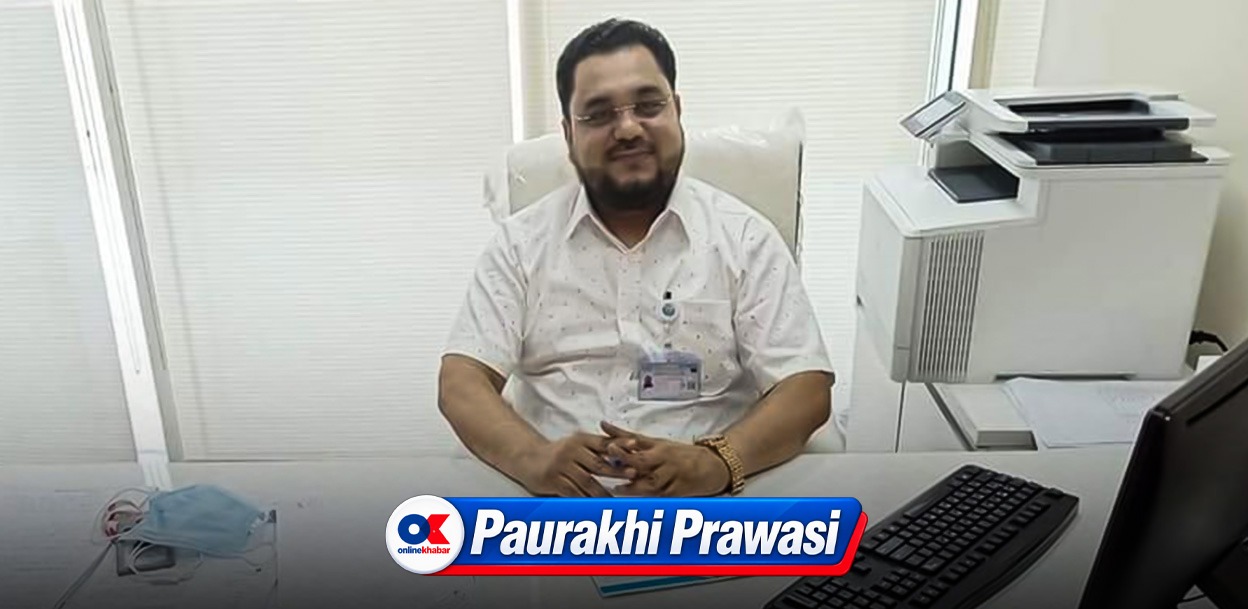
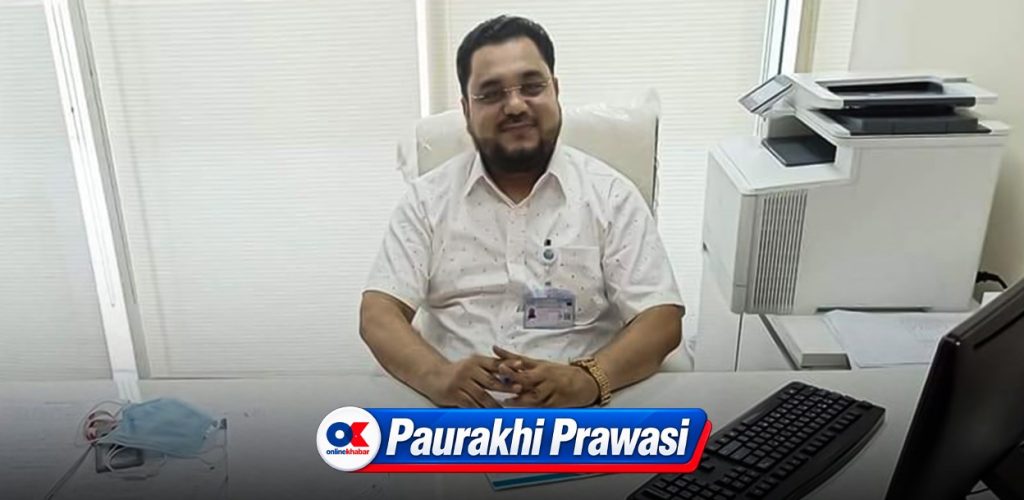
When Mohammed Ramzan Ali Miya arrived in Qatar in 2007, he was not looking to become an advocate for migrant workers. With a postgraduate degree in Arabic literature and an interest in Islamic philosophy, he had travelled to the Gulf with a desire to deepen his understanding of the language, culture and legal system he had studied.
His journey to Qatar had begun almost by chance. He had attended a seminar in Bahrain and initially thought of the trip as an opportunity to travel. But the prospect of exploring Qatar’s Arabic-speaking environment, its way of life and its laws soon drew his attention.
“I had initially come with the idea of travelling,” he says. “Later, I became interested in understanding Qatar’s Arabic environment, lifestyle and laws.”
What he encountered would take him beyond academic study and into the everyday realities of migration.
As he listened to Nepali workers describe their experiences, he began to see how language, unfamiliar laws and limited access to information could leave people vulnerable in a country where they had come to earn a living.
Over time, his work expanded from writing about their problems to helping them seek legal assistance, translating labour laws into Nepali and connecting the Nepali community with Qatari institutions.
Nearly two decades later, Miya has built a career around migrant workers’ rights, translation, human rights advocacy and strengthening ties between Nepal and Qatar.
Mohammed Ramzan Ali Miya’s early involvement with migrant workers was shaped by his work at the Nepali embassy in Qatar.
At the time, Ram Kaji Khadka was serving as the acting head of the embassy, and Miya worked as his private secretary. During his time there, he regularly heard from young Nepali workers who came to the embassy seeking help.
Their problems varied, but many involved difficulties that could have been avoided had they better understood the country’s laws and procedures.
Miya began documenting these experiences. He wrote an article in Arabic for a Qatari newspaper, outlining the problems Nepali workers faced and suggesting ways to address them.
The article attracted the attention of the authorities.
After reading it, security officials summoned Miya and asked whether the problems he had described were genuinely occurring among Nepali workers.
He explained that his account was based on the experiences of workers who had approached the Nepali embassy for help. He urged the authorities to investigate the issues and work towards resolving them.
The episode reinforced the importance of making workers’ experiences visible in a language understood by the institutions capable of responding to them.
For Mohammed Ramzan Ali Miya, Arabic was not simply an academic specialisation. It had become a means of communicating the concerns of a community that often struggled to make itself heard.
In mid-2007, Qatari authorities approached him about working to address migrant workers’ problems. Miya told them he was willing to help voluntarily but did not want to take up the role as an employee. He worked at the embassy from around the middle of 2007 until the end of that year.
His involvement with workers’ issues continued beyond his embassy role.
As Nepali community leaders began coming together to provide relief, rescue and legal assistance to workers in distress, Miya took on a coordinating role representing the Nepali community at Qatar’s National Human Rights Committee. He also became the coordinator of its Nepali help desk.
The position gave him another avenue through which to raise workers’ concerns and seek institutional support.
It also helped him establish links with Nepal’s National Human Rights Commission. The two countries’ human rights bodies subsequently entered into a working agreement, creating a basis for cooperation on human rights issues.

For migrant workers, the problem is not always that a law does not exist. Sometimes, it is that they do not know what the law says, what it requires of them or what protection it offers.
Mohammed Ramzan Ali Miya came to see language as a crucial part of that gap.
During his time at the Nepali embassy and the human rights committee’s help desk, he encountered hundreds of cases involving Nepali workers. Some had been imprisoned after failing to understand basic legal requirements. Others had found themselves in trouble after violating rules they did not know existed.
“I saw and heard hundreds of cases while working at the Nepali embassy in Qatar and at the National Human Rights Committee’s help desk,” he says.
The experience convinced him that workers needed accessible information about the legal system in which they lived and worked.
In 2009, he translated Qatar’s labour law from Arabic into Nepali, seeking to make its provisions easier for Nepali workers to understand. He went on to translate and prepare other materials covering labour rights, human rights and practical guidance for people working in Qatar.
His work includes publications on Qatar’s labour legislation, traffic laws, migrant workers’ rights and the effective use of time. Among his books are The Qatar I Have Seen, a guide to modern Arabic, a workers’ rights handbook, the 2016 edition of Qatar’s labour law and an Urdu-Nepali dictionary.
He has also translated educational materials covering the legal rights of domestic workers, guidance for migrant workers in Qatar, human rights standards for accommodation used by temporary construction workers, and human rights issues in detention, punishment and rehabilitation facilities.
Other publications address Qatar’s residency and immigration laws, including the legislation introduced in 2005 and 2015.
His aim has been to make legal information available in a language workers can read and understand, rather than leaving them dependent on others to interpret rules that may directly affect their lives.
Miya also works as a legal consultant, helping people understand their circumstances and coordinating with relevant parties when problems arise.
The cases brought to him reflect the range of difficulties Nepali workers can encounter abroad, including unpaid wages, labour exploitation, human rights violations and gender-based violence.
He says he continues to work with the relevant authorities and organisations to help affected workers pursue remedies and obtain assistance.

Mohammed Ramzan Ali Miya’s work has also brought him into contact with the economic conditions facing Nepali workers in Qatar.
He believes wages and skills remain closely connected, particularly for workers who arrive without the training needed to access better-paid jobs.
“In the case of skilled workers, there is no discrimination in wages,” he says. “The failure to implement minimum wages is also related to workers’ lack of skills and capacity.”
His comments reflect his emphasis on the importance of workers understanding their rights while also having access to the skills and training that can improve their employment prospects.
For him, protecting migrant workers requires more than responding when something goes wrong. It also means improving their access to information, strengthening their ability to navigate the system and helping connect them with institutions that can offer support.
That approach has shaped much of his work with the Nepali community.
Beyond legal assistance and translation, Miya has helped connect Nepali organisations and community members with Qatari institutions, including Qatar Charity, Qatar Foundation, Reach Out To Asia (ROTA), the Red Crescent, the Olympic Committee and Qatar Radio.
Qatar Charity and the Red Crescent have since established offices in Nepal, extending their humanitarian work into the country.
For Miya, these relationships are another way of turning connections between the two countries into practical cooperation.
Mohammed Ramzan Ali Miya’s work has not been limited to migrant workers’ rights. He has also been involved in promoting Nepal’s identity and strengthening cultural, economic and diplomatic ties with Qatar.
During Qatar’s national celebrations, he has served as a coordinator representing Nepal, helping bring Nepali culture, traditional dress and the arts into the spotlight.
He sees cultural representation as an important part of how a country is understood abroad.
At the same time, he has encouraged Qatari businesses and investors to visit Nepal, study its opportunities and consider investment. He has also advised both sides on cooperation involving Qatar’s Ministry of Culture and on trade-related memorandums of understanding.
Mohammed Ramzan Ali Miya believes Nepal could make better use of its relationship with Qatar in sectors such as agriculture, tourism, infrastructure, energy and water resources.
For him, stronger diplomatic relations should lead to tangible economic outcomes.
“Nepal needs a concrete plan to take products made in the country to the Qatari market,” he says. “When imports and exports are not facilitated and the expected results are not achieved, Nepal continues to face a substantial trade deficit every year.”
His argument is that Nepal needs to approach the relationship with clear priorities and practical proposals, rather than relying on diplomatic goodwill alone.
The same principle of building connections between people and institutions has guided his work in humanitarian assistance.

One of Mohammed Ramzan Ali Miya’s most memorable initiatives came after the devastating earthquake that struck Nepal in 2015.
He helped organise a fundraising appeal through Qatar Television under the banner We Stand With Nepal. The campaign called on people in Qatar to contribute to relief efforts for those affected by the disaster.
According to Miya, the appeal raised around 300 million Qatari riyals.
The earthquake response was among the experiences he remembers most vividly. He also helped facilitate cooperation between Nepali businesspeople and Qatari entrepreneurs, including Nasser Al Ali, during the aftermath of the earthquake and later during the difficulties caused by the Covid-19 pandemic.
For Miya , the collaboration demonstrated what could be achieved when relationships built over time were mobilised in response to a crisis.
His work had begun with listening to individual workers’ problems. The earthquake response showed how those connections could also help mobilise assistance on a much larger scale.
Mohammed Ramzan Ali Miya, now 48, was born in Kathmandu, although his ancestral home is in Gorkha. He grew up in the capital’s wider surroundings and is a permanent resident of Mahalaxmi Municipality in Lalitpur.
His academic background provided the foundation for the work he would later undertake.
In 2003, he completed a master’s degree in Arabic literature at the University of Karachi’s Department of Islamic Studies in Pakistan.
His command of Arabic, Nepali and English has allowed him to work across languages and institutions. He has also written and translated books in Nepali, Urdu and English, with more than 40 publications to his name.
The breadth of that work reflects a career that has moved between scholarship, practical legal guidance, community service and international engagement.
Arabic literature may have been what first drew him towards the Gulf, but his work in Qatar has been shaped by the people he encountered there, particularly those who needed help understanding the country in which they had come to work.
His contribution has been recognised through dozens of awards for his work in translation, human rights, literature and social service.
Yet the thread connecting these different roles remains consistent: making information accessible, helping people navigate unfamiliar systems and creating connections between communities and institutions.
For Nepali workers in Qatar, the consequences of misunderstanding a law or being unable to communicate a problem can be serious. Miya’s work has sought to narrow that gap, one translation, consultation and case at a time.
His story is also a reminder that migration does not always follow the path people initially imagine. A journey undertaken to study a language and culture can become something larger, shaped by the needs of a community and the opportunities to serve it.
For Miya, understanding Qatar has ultimately meant more than learning its language, literature or laws. It has meant helping Nepalis understand them, too.
The post The man who became a voice for Nepali workers in Qatar appeared first on OnlineKhabar English News.






९ कात्तिक , २,०८३





 AED
 AUD
 BHD
 CAD
 CHF
 CNY
 DKK
 EUR
 GBP
 HKD
 INR
 JPY
 KRW
 KWD
 MYR
 OMR
 QAR
 SAR
 SEK
 SGD
 THB
 USD