 नोटिफाई नेपाल
Loading...

Kathmandu, September 15
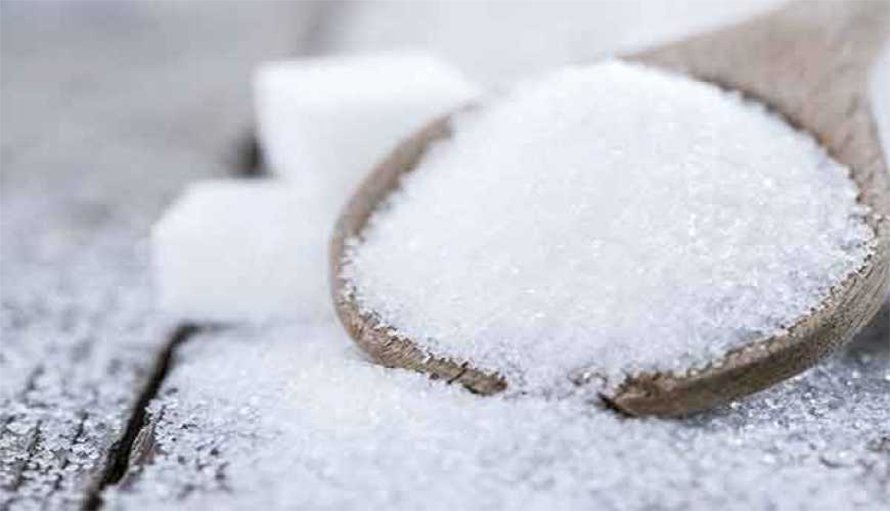
Sugar consumption peaks during Dashain, Tihar and Chhath, but consumers have been struggling to find the essential commodity for more than two months as the festive season approaches.
Sugar that was available for around Rs 95 per kg until April is now being sold for Rs 110 to more than Rs 150, with some consumers reporting prices as high as Rs 170 per kg.
The shortage has affected households preparing everything from daily tea to festive sweets and other traditional dishes. Consumers say they are having to visit several shops to find sugar, while some retailers are allegedly hoarding supplies and selling them at inflated prices.
The situation is particularly striking because the government has approved large-scale sugar imports at a reduced customs duty, while state-owned companies have claimed they have sufficient stocks.
Pratikshya Khanal of Tokha said she recently had to visit three or four shops before finding a kilogram of sugar near her home. She eventually paid Rs 170.
“The shopkeeper said sugar was not available and that the sugar they had was expensive. Since I needed it, I had to pay Rs 170,” she said.
Radha Koirala of New Baneshwor said the price had risen sharply within just 15 days.
“I bought a kilogram for Rs 120 15 days ago, but yesterday I had to pay Rs 160,” she said. “Initially, the shopkeeper said there was no sugar, but later brought some out.”
Koirala also claimed the shopkeeper refused to accept payment through QR and asked her to pay in cash, saying the digital payment system was not working.
She normally consumes only around one kilogram of sugar in 20 to 25 days but expects her household’s demand to increase during Dashain and Tihar.
Jeevan KC, who runs a grocery shop in Shankhamul, said he could not obtain sugar from his regular wholesaler for around 20 days.
“The wholesaler said there was no sugar in the warehouse, so I could not sell it for 20 days,” he said.
KC said he eventually purchased three sacks from Salt Trading Corporation. Although the corporation sold the sugar at Rs 105 per kg, he said transportation costs meant he had to sell it at a higher price.
Large private sugar importers say they are unable to bring sugar into Nepal because of high international prices and India’s restrictions on sugar exports.
A major importer, speaking on condition of anonymity, said the government’s 15 percent customs-duty concession was not enough to make imports commercially viable.
“India has restricted exports. If we import from a third country, the price is more than $620 per tonne,” the importer said. “The cost by the time it reaches Nepal comes to around Rs 155 per kg. How can we import sugar at Rs 155 and sell it cheaply?”
According to the importer, Salt Trading is currently the only institution capable of easing the shortage.
He also said recent floods and landslides disrupted transportation to Kathmandu, with large cargo vehicles unable to enter the Valley. With roads gradually reopening, he expects supplies to improve.
As complaints over shortages and price increases intensified, the government approved the import of 25,000 tonnes of sugar at a one percent customs duty on September 3.
The sugar is being imported by state-owned Salt Trading Corporation and Food Management and Trading Company.
The aim is to increase supply, provide sugar to consumers at affordable prices and prevent further price manipulation in the market.
Salt Trading says it already has substantial stocks and that consumers do not need to panic.
The corporation is currently selling sugar at Rs 105 per kg, significantly below the reported retail price of Rs 170.
Salt Trading spokesperson Kumar Rajbhandari said the corporation is providing four to six kilograms of sugar per household.
“We are currently selling sugar at Rs 105 per kg and providing up to six kilograms to consumers,” he said.
According to Rajbhandari, Salt Trading currently has around 6,000 to 10,000 tonnes of sugar across the country. It is selling sugar through branches in Kathmandu, Birgunj, Bhairahawa, Biratnagar, Dhangadhi and Nepalgunj.
The corporation had targeted purchasing 12,000 tonnes of domestically produced sugar and has already procured around 6,000 tonnes.
It is also expecting 22,500 tonnes of sugar from India. Of this, 2,500 tonnes have already arrived and are being cleared through customs, another 2,500 tonnes are coming through the Biratnagar border, and 7,500 tonnes are in the pipeline.
Rajbhandari said transportation remains a challenge because of road disruptions caused by floods and landslides.
“Large-capacity vehicles have not been able to come because of the road conditions, but we are transporting sugar using smaller 10-tonne trucks,” he said.
He expects supplies to become easier after the roads reopen from October 1.
The Food Management and Trading Company has also been selling sugar at subsidised prices.
Its information officer Madhav Mishra said the company has around 1,200 tonnes of sugar in stock, while 100 tonnes imported from India has already arrived.
The company is also purchasing sugar from domestic industries and mills.
To ensure subsidised sugar reaches more consumers, it has imposed purchase quotas. Consumers in Kathmandu Valley can buy two kilograms per person, while those outside the Valley can receive two to four kilograms depending on availability.
The company is selling sugar for Rs 109 per kg in Kathmandu and Rs 110 per kg elsewhere, including transportation costs.
Mishra said the procurement process for the sugar approved at one percent customs duty has already begun and the imported sugar is expected to arrive before Dashain and Tihar.
Wholesalers say the market has started to improve after Salt Trading increased the amount of sugar supplied to them.
Balaju-based wholesaler Ishwor Shrestha said Salt Trading increased its wholesale quota from Monday.
“Sugar is gradually becoming easier to obtain. Salt Trading has increased the quantity supplied,” he said. “The market should come under control within the next two to four days.”
However, Shrestha said private-sector sugar remains considerably more expensive. Wholesalers currently have to pay between Rs 128 and Rs 130 per kg when buying from private suppliers.
The contrasting claims from consumers, traders and government agencies suggest that Nepal’s sugar crisis is not simply a matter of insufficient national supply.
While state-owned companies say they have thousands of tonnes of sugar available and are selling it at around Rs 105 to Rs 110 per kg, consumers in ordinary neighbourhood shops are paying as much as Rs 170.
Government outlets are also limited, meaning most consumers cannot spend hours waiting in line to buy a few kilograms of sugar. Their main source remains local grocery shops.
Consumers have accused some retailers of withholding sugar, selling it only to selected customers and refusing digital payments to avoid leaving records of inflated transactions.
If such practices are taking place, increasing government stocks alone will not solve the problem.
Effective market monitoring and action against hoarding and black-market sales will be essential to ensure that the additional sugar being imported actually reaches consumers at reasonable prices before Dashain, Tihar and Chhath.
The post Sugar shortage deepens ahead of Dashain as prices climb to Rs 170 per kg appeared first on OnlineKhabar English News.





२८ भदौ , २,०८३







 AED
AED AUD
AUD BHD
BHD CAD
CAD CHF
CHF CNY
CNY DKK
DKK EUR
EUR GBP
GBP HKD
HKD INR
INR JPY
JPY KRW
KRW KWD
KWD MYR
MYR OMR
OMR QAR
QAR SAR
SAR SEK
SEK SGD
SGD THB
THB USD
USD