 नोटिफाई नेपाल
Loading...

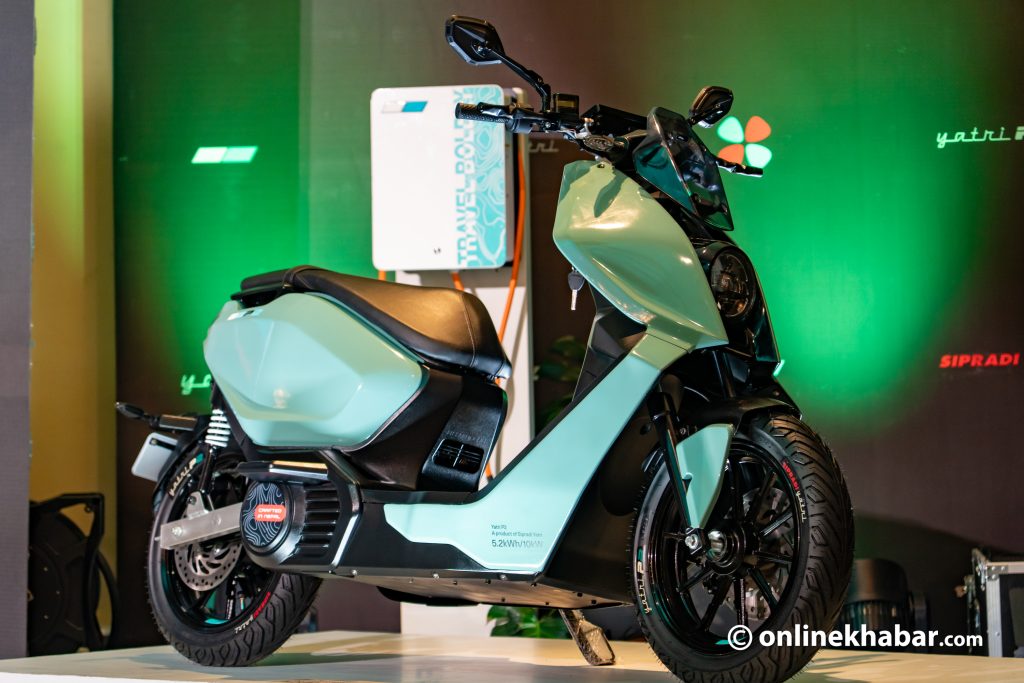
An electric scooter does not begin its journey on an assembly line. It starts with a sketch.
For Nepal’s Yatri, the development of its latest electric scooter, the Yatri P-2, began in much the same way. More than two years of research, design, engineering and road testing went into developing a scooter that the company says is designed with Nepal’s roads and riding conditions in mind.
The Yatri P-2 has been designed and manufactured in Nepal in collaboration with Sipradi Trading. It is available with three battery options — 5.2 kWh, 3.7 kWh and 3 kWh.
According to the company, the largest 5.2 kWh battery can deliver a range of up to 157 kilometres on a full charge.
But the range is only one part of the development process. Behind the finished scooter is a series of computer simulations, electrical testing, battery testing, chassis fabrication, assembly and road trials.
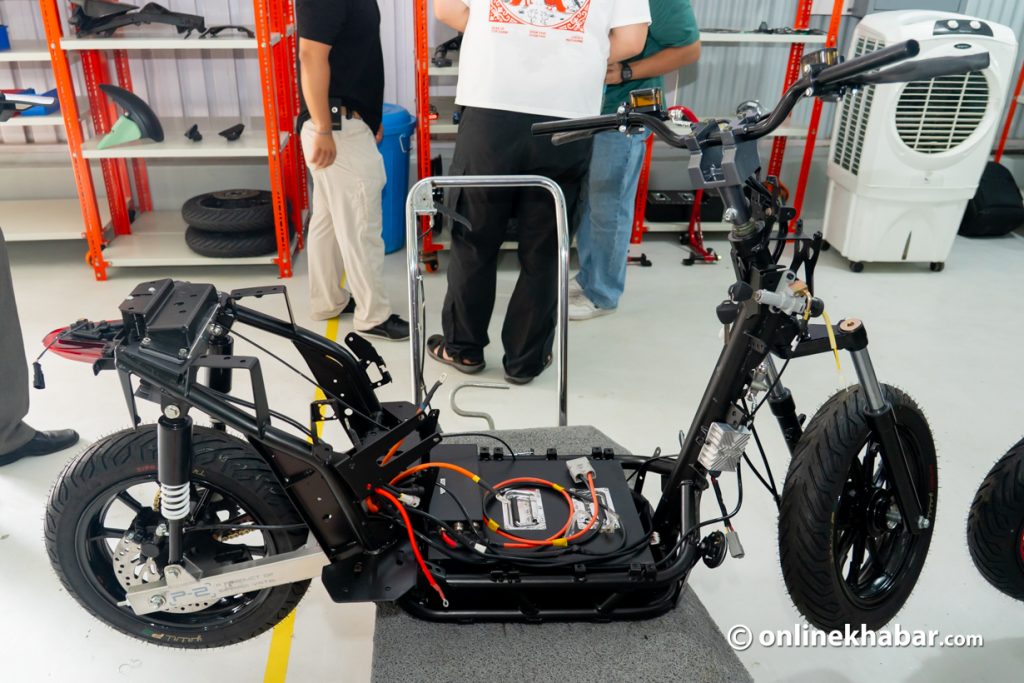
According to Yatri Head of Product Krishna Prasad Shrestha, development of the Yatri P-2 began with a simple line sketch.
“The first form was a sketch,” Shrestha said. “It starts with a sketch and gradually develops into the final product.”
Once the initial design is ready, engineers begin testing individual components digitally before they are manufactured.
The chassis, swingarm and other critical components are subjected to computer simulations to determine how they will respond to stress, rough roads and other conditions.
Engineers check whether excessive pressure could develop in a particular component, whether the chassis could be damaged when riding over potholes and whether weld points could experience abnormal stress.
According to Shrestha, potential weaknesses can be identified months before manufacturing through these simulations.
Once a design passes the simulations, physical components are manufactured and subjected to durability testing. The scooter is then tested on actual roads, with data from road testing compared with the results of computer simulations.
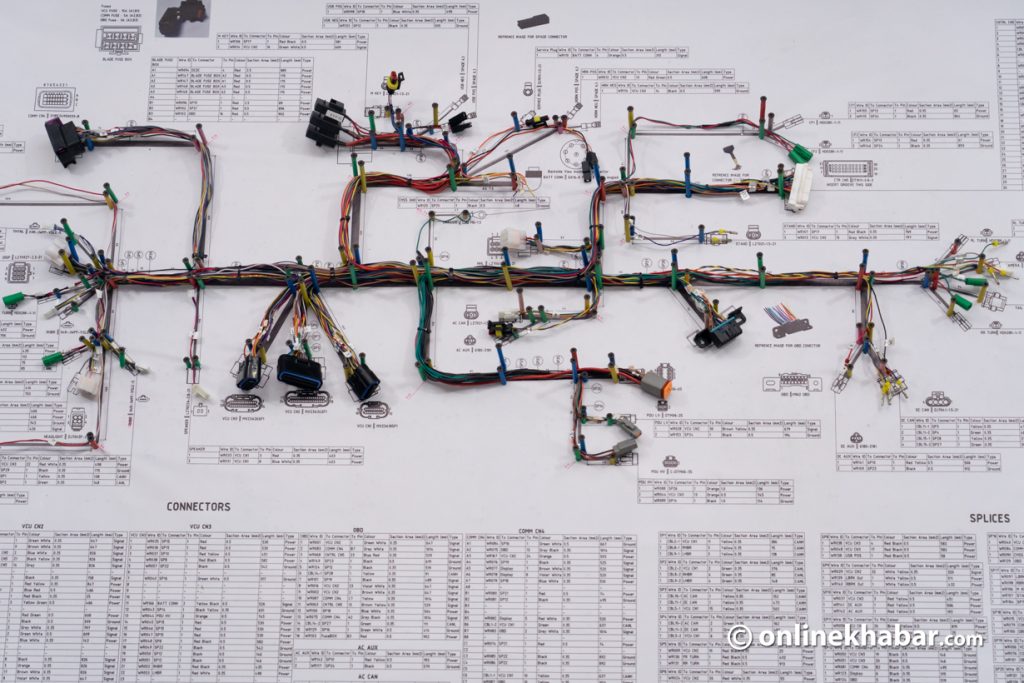
The Yatri P-2 is not simply a combination of a chassis, motor and battery. Its electrical and electronic architecture is another major part of the vehicle.
Engineers first determine how the scooter’s electrical components will connect and communicate. The system is then converted into a physical wiring harness.
According to Shrestha, one harness developed by Yatri contains more than 150 wires.
The company tests the electrical system on a dedicated test bench before installing it on the scooter. Components including the display, combination board, vehicle control unit (VCU), horn and throttle are tested together.
Functions such as the stand switch, turn indicators and data transmission to the mobile application are also checked before the scooter reaches the road.
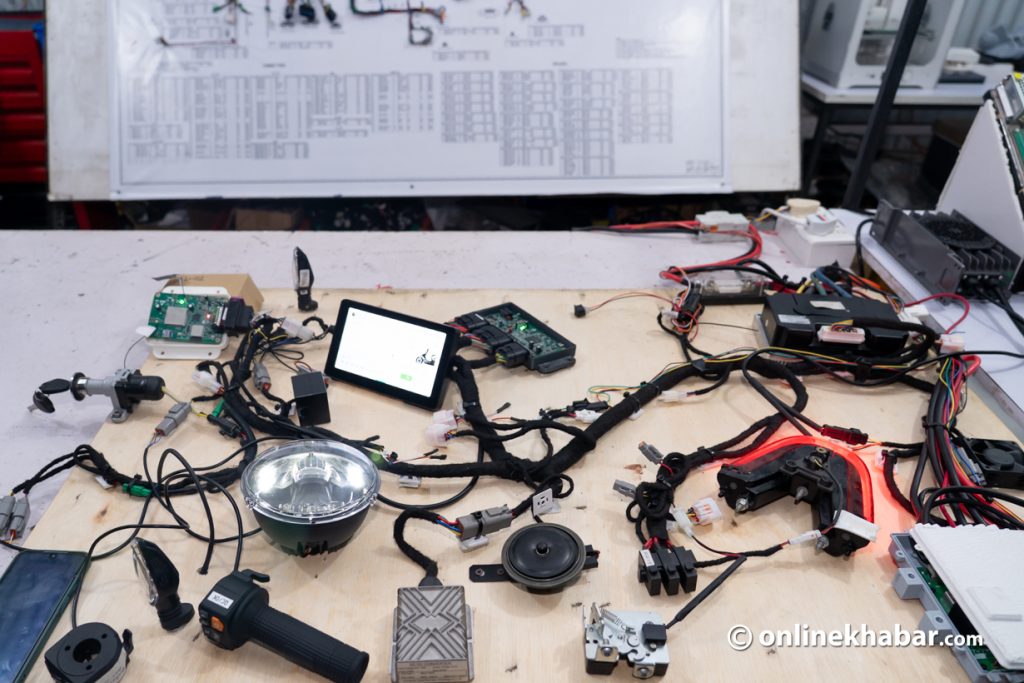
The vehicle control unit, or VCU, is another key component of the Yatri P-2.
Yatri designed the VCU board itself, while the board is manufactured in China. Once the boards arrive in Nepal, Yatri engineers program, test and validate them before they are sent to the production line.
Shrestha describes the VCU as the “brain” of the scooter because it controls and executes various vehicle functions.
An Internet of Things (IoT) device also connects the scooter to Yatri’s backend network, making software and connectivity an integral part of the vehicle.
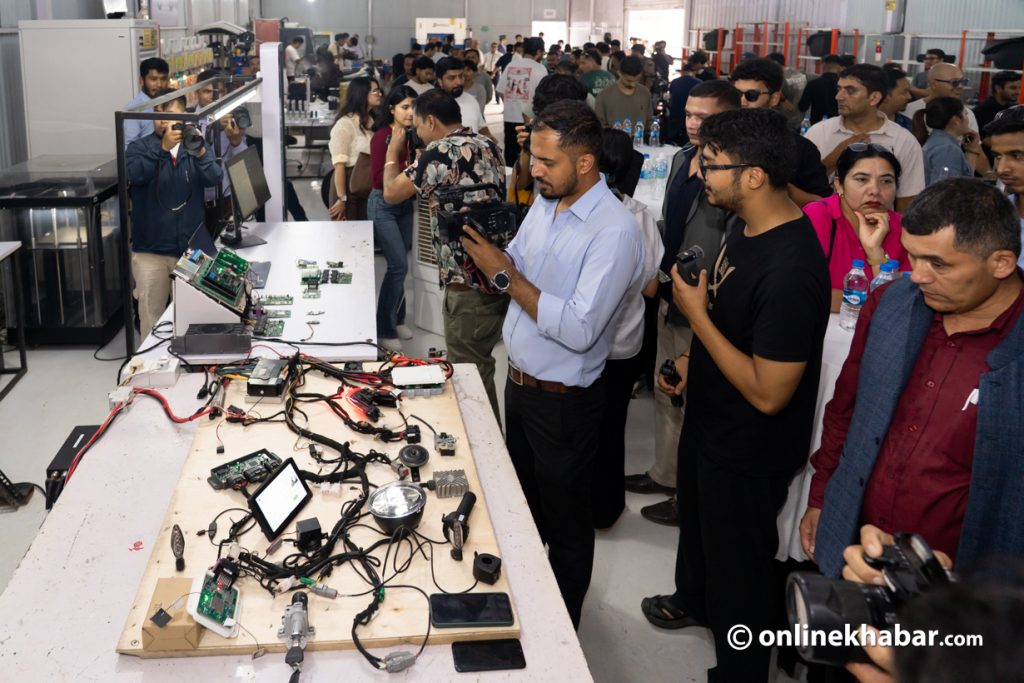
Battery performance is a critical aspect of any electric vehicle. Yatri has therefore subjected the Yatri P-2’s batteries to accelerated testing.
The company’s battery tester repeatedly charges and discharges batteries to generate data on their long-term performance in a shorter period.
The tests are designed to determine how long a battery can maintain its capacity, when degradation begins and how its performance compares with the company’s range and warranty expectations.
Yatri initially studied the range requirements before developing different battery sizes. The company eventually selected three options — 5.2 kWh, 3.7 kWh and 3 kWh — to offer different combinations of range and price.
The batteries are currently assembled in Nepal using imported parts under a semi-knocked-down (SKD) model. Yatri says it plans to manufacture batteries in Nepal in the future, with infrastructure being developed in Gajuri for the purpose.
Alongside the scooter, Yatri has also been expanding its charging infrastructure.
The company says it has installed more than 20 charging stations in different parts of the country, including Kathmandu Valley, Bhairahawa and Chitwan.
It is expanding the network towards Pokhara, Butwal and Biratnagar and has also extended charging access to Mustang, according to Shrestha.
The Yatri P-2 uses a 3.3 kW charger. Under certain conditions, the company says the battery can be charged to around 80 percent in approximately 40 to 41 minutes.
The charging network is intended to reduce range anxiety, particularly for riders travelling longer distances.
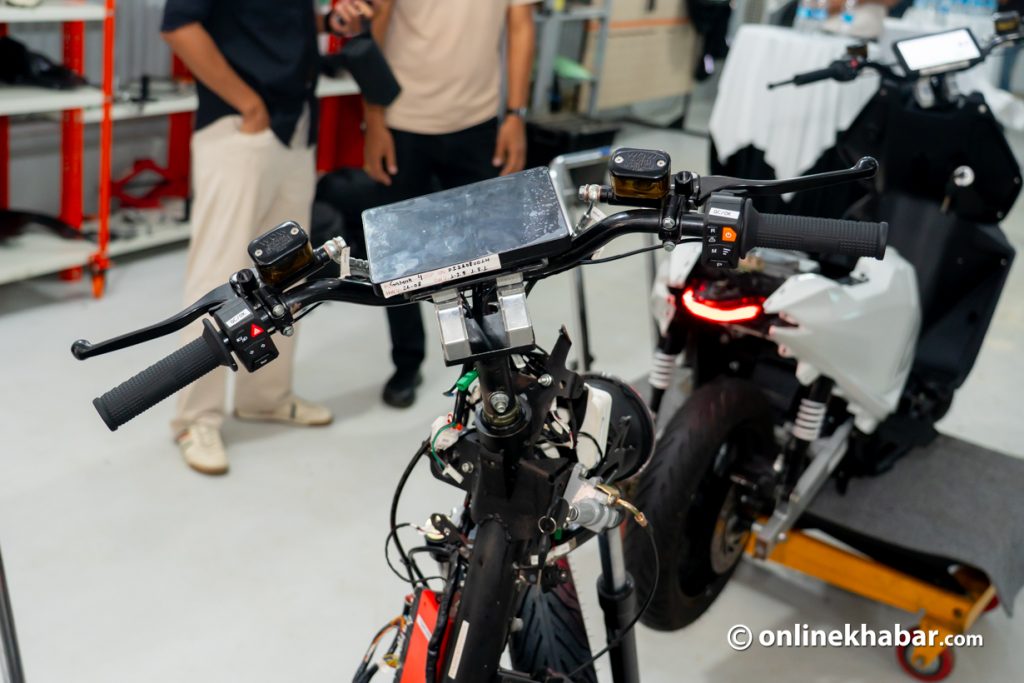
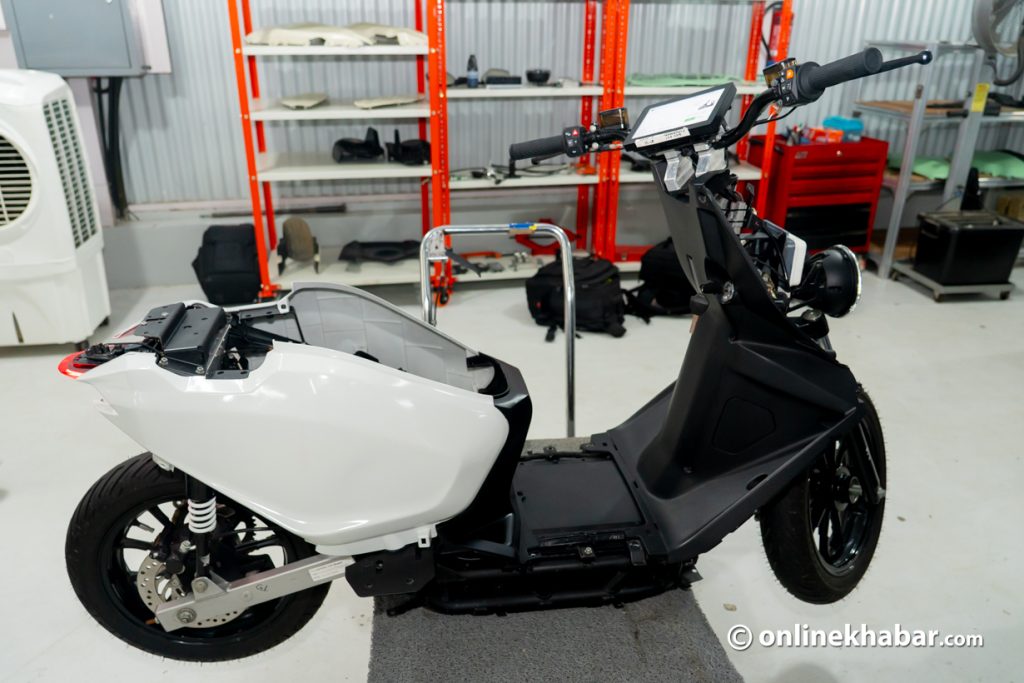
The Yatri P-2 assembly line is divided into three main stages.
The first station involves the installation of major components such as the motor, battery, chassis and wheel set. Electrical components are installed at the second station, while panels are fitted and additional testing is carried out at the third.
The completed scooter then undergoes dynamometer testing to assess various performance and functional aspects.
If a problem is identified, the scooter is not sent directly to the market. It is moved to a separate quarantine area for further testing and corrective work.
Yatri currently has an annual production capacity of around 8,000 to 10,000 scooters, according to Shrestha. The company plans to increase capacity depending on market demand.
Producing a component once is one challenge. Producing it repeatedly to the same specifications is another.
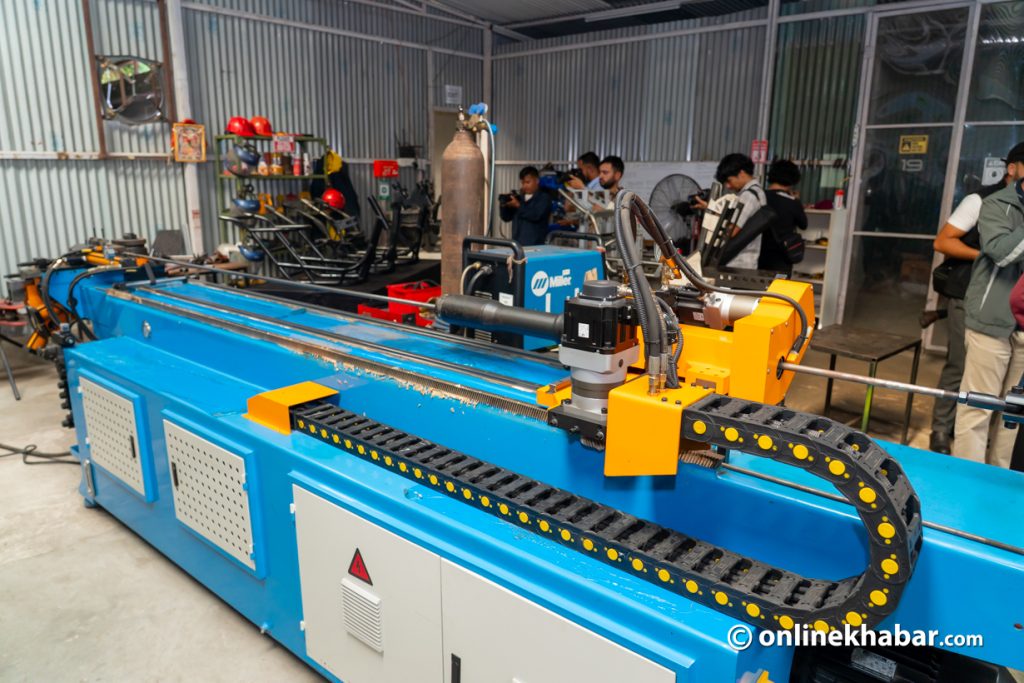
Yatri uses jigs and fixtures to maintain consistency during chassis production. The equipment holds different chassis components in fixed positions during welding, helping maintain uniform dimensions and welding positions.
The jigs and fixtures are designed by Yatri in Nepal but manufactured in India and brought to Nepal. The chassis itself is manufactured at the company’s facility in Gajuri, Dhading.
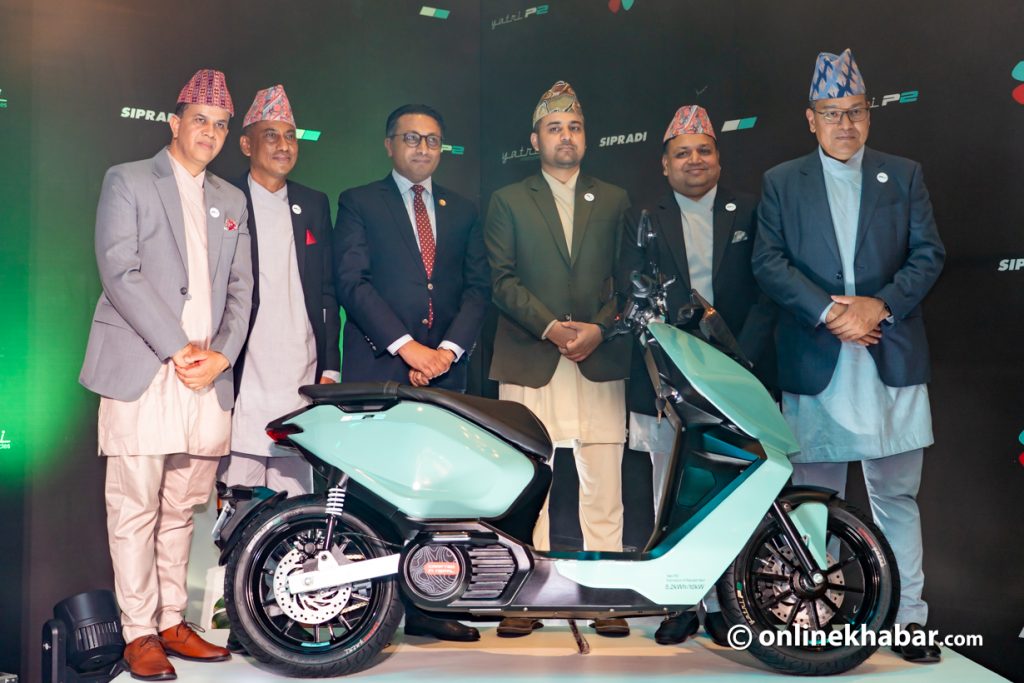
Although Yatri describes the Yatri P-2 as designed and manufactured in Nepal, not every component is produced domestically.
The company develops specifications for many of the components, which are then manufactured by overseas suppliers according to those specifications.
Yatri still depends on China for components such as the motor and controller. The VCU board is also manufactured in China before being brought to Nepal for programming, testing and validation.
Similarly, although the jigs and fixtures are designed in Nepal, their manufacturing requires reliance on suppliers in India or China.
“We cannot produce everything here, so there is some dependency,” Shrestha said. “We develop the specifications, and they manufacture the products for us accordingly.”
The Yatri P-2’s Nepali identity, therefore, extends beyond assembling imported components. Its design, engineering, system development, software, testing and parts of the manufacturing process involve Yatri’s engineers and designers in Nepal.
The development of the Yatri P-2 illustrates the complexity behind producing an electric two-wheeler.
From an initial sketch, the development process moves through computer simulations, electrical architecture, software development, test benches, VCU testing, accelerated battery testing, chassis fabrication, assembly, dynamometer testing and road trials.
While some components are designed and manufactured in Nepal, the company continues to rely on overseas suppliers for several technologically advanced parts.
For Yatri, the P-2 is therefore not just a new electric scooter. It represents an effort to expand Nepal’s capacity to design, engineer and manufacture electric two-wheelers.
Shrestha has been with Yatri for around eight years, while Manu Aryal, who leads the P-2’s finite element analysis (FEA) work, has been with the company for the past two to three years.
The Yatri P-2 now seen on Nepal’s roads is the result of thousands of hours of computer simulations, test-bench trials, battery testing and real-world data collected from Nepal’s roads.
What emerges from the factory is not simply a finished scooter, but the outcome of a development process that began with a sketch and evolved into a locally engineered electric vehicle.
The post Yatri P-2: The making of a Nepali electric scooter appeared first on OnlineKhabar English News.




 AED
AED AUD
AUD BHD
BHD CAD
CAD CHF
CHF CNY
CNY DKK
DKK EUR
EUR GBP
GBP HKD
HKD INR
INR JPY
JPY KRW
KRW KWD
KWD MYR
MYR OMR
OMR QAR
QAR SAR
SAR SEK
SEK SGD
SGD THB
THB USD
USD